Showing posts with label Food. Show all posts

Friday, August 05, 2022

A Brief History of Foods: Oranges

Origins  The name 'orange' derives from the Sanskrit word for 'orange tree' (नारङ्ग nāraṅga). The Sanskrit word reached European languages through Persian نارنگ (nārang) and its Arabic derivative نارنج (nāranj). 'Orange' entered Late Middle English in the 14th century via the Old French word orenge (as in the phrase pomme d'orenge), which is itself based on the Arabic nāranj. The colour was named after the fruit [1] and, according to the Oxford English Dictionary, the first recorded use of orange as a colour name in English was in 1512.

There are two types of orange: the bitter orange most notably used to make marmalade (or in other recipes needing a sharper flavour), and the sweet orange. While the orange is unknown in the wild state, it is assumed that the bitter orange originated in southern China, north-eastern India, and perhaps south-eastern Asia (formerly Indochina) possibly from a cross between pure mandarin [2] and pomelo parents. In contrast, the sweet orange is not a wild fruit [3], but a domesticated cross between a non-pure mandarin orange and a hybrid pomelo. All varieties of the sweet orange descend from this original cross and have a distinct origin from the bitter orange.

Arrival in Europe  In AD 711 the Islamic Arabs and Moors of Berber descent crossed the Strait of Gibraltar from northern Africa into the Iberian Peninsula.  In a series of raids they conquered Visigothic Christian lands, and after an eight-year campaign brought most of Iberia under Islamic rule. The arrival of the Moors invigorated in Europe a renewed interest in scientific knowledge and learning, advanced new ideas in mathematics (algebra, geometry, trigonometry and calculus), introduced a novel writing system, paper to actually write on, and the bitter orange.

Complex irrigation techniques specifically adapted to support orange orchards is evidence of large-scale cultivation from the 10th century AD onwards [4]. Citrus fruits - among them the bitter orange - were introduced to Sicily in the 9th century with the Muslim conquest of Sicily, but the sweet orange was unknown until the late 15th century. It was carried to the Mediterranean area possibly by Italian traders after AD 1450 or by Portuguese navigators around AD 1500. Until that point, citrus fruits were valued by Europeans mainly for medicinal purposes, but the sweet orange was quickly adopted as a luscious fruit. Considered a luxury item, the wealthy grew oranges in private conservatories, called orangeries. By 1646, the sweet orange was well known throughout Europe [5].

Orange Cake  One hundred years later and Margaretta Acworth recorded a delicious recipe for Orange Cake in her personal recipe book. The book itself may have been begun by her mother, Anne Ball, but Margaretta continually added to it, exchanging recipes with friends and relatives. Some of those that survive date from the 1720s or earlier suggesting they may well have been handed down to Anne Ball from her own mother. Regardless, this remarkable book records 70 years of practical cookery performed by affluent Georgian women.

Mrs Acworth cookery book includes a wide range of cakes which perhaps reflects the relatively new Georgian fashion for taking afternoon tea. Today such cakes typically have self-raising flour as the raising agent. But in 1745 when Margaretta married Abraham Acworth it would be another century before self-raising flour was invented [6]. Thus, during the 18th century, cooks made increasing use of eggs as raising agents in preference to the yeast of earlier times [7]. The result is a firmer but moist cake bursting with sweet orange flavour.

Bon appétit!

Endnotes:

1.  Paterson, I., (2003), A Dictionary of Colour: A Lexicon of the Language of Colour, London: Thorogood, p. 280.

2. The mandarin orange (Citrus reticulata), also known simply as the mandarin (or mandarine), is a small citrus tree fruit treated as a distinct species of orange.

3. Hodgson, R.W., (1967-1989), 'Chapter 4: Horticultural Varieties of Citrus'.

4. Trillo San José, C., (2003), 'Water and landscape in Granada', Universidad de Granada.

5. Morton, J., (1987), 'Orange, Citrus sinensis. In: Fruits of Warm Climates', New Crop Resource Online Program, Center for New Crops & Plant Products, Purdue University, pp. 134–1421.

6. Self-raising flour was invented by Bristol baker Henry Jones.  He was granted a patent for self-raising flour in 1845, and by the end of 1846 its runaway success led to him being appointed purveyor of patent flour and biscuits by Royal Appointment to Queen Victoria.

7. Prochaska, A & Prochaska, F. (eds.), (1987), 'Margaretta Acworth’s Georgian Cookery Book', London: Pavilion Books, p. 91.

Tuesday, April 19, 2022

A Brief History of Foods: Pineapple

The pineapple (Latin: Ananas comosus) [1] is a tropical plant with an edible fruit indigenous to South America, where it has been cultivated for many centuries. The introduction of the pineapple to Europe in the 17th-century made it a significant cultural icon of luxury. Since the 1820s, pineapple has been commercially grown in greenhouses and many tropical plantations.

The wild plant is native to southern Brazil and Paraguay, especially the Paraná-Paraguay River area where wild relatives occur (Morton, 1987, 18-28). Little is known about its domestication, but it spread as a crop throughout South America. Archaeological evidence of cultivation/use has been found dating to 1200 - 800 BC in Peru and 200 BC - AD 700 in Mexico, where it was cultivated by the Mayas and the Aztecs. By the late 1400s, cropped pineapple was widely distributed and a stable component of the diet of Meso- Americans (Morton, op. cit.).

Europe’s obsession  The first European to encounter the pineapple was Columbus, in Guadeloupe on November 4th, 1493 and again in Panama in 1502. He took the plant back to Spain introducing it as piña de Indes, meaning ‘pine of the Indians’. Eventually, in the 17th-century, the fruit was named pineapple in English because its appearance was reminiscent of the pinecone. The pineapple fascinated Europeans, but it was not successfully cultivated in Europe until Pieter de la Court developed greenhouse horticulture near Leiden sometime around 1658. Before then Europeans had to rely on the extremely expensive option of directly importing pineapples. De la Court’s innovation allowed the fruits to be home-grown but the equipment and labour required to grow them in a temperate climate in greenhouses called ‘pineries’ remained enormous. Thus, pineapples became a symbol of wealth. They were such a rare, desirable item that the scaly, sweet fruit was too valuable to eat - a single pineapple was worth thousands of pounds and often the same one would be paraded from event to event, dinner party to dinner party until it eventually went rotten. In time a ‘roaring trade in pineapple rental developed, where ambitious but less well-off folk might hire one for a special event, dinner party or even just to jauntily tuck under an arm on a show-off stroll’ (Bell, 2020). Even in the architecture of the time, pineapples became decorative elements symbolizing hospitality. They can still be seen as finials on railings, in gardens and adorning gate pillars in Britain today.

Pineapple plants were distributed from the Netherlands to English gardeners in 1719 and to the French a year later. In England, the first pineapple was grown at Dorney Court in Buckinghamshire, and a huge ‘pineapple stove’ to heat the plants was built at the Chelsea Physic Garden in 1723. While in France, King Louis XV was presented with a pineapple that had been grown at Versailles in 1733, and in Russia, Catherine the Great ate pineapples grown on her own estates before 1796.

Pineapples do not want to be eaten!  The fruit is a collection of flowers, each with its own eye fused around a central core, which takes a staggering three years to mature (Shubrook, 2022). The flesh and juice of the pineapple are used in cuisines around the world. In many tropical countries, pineapple is prepared and sold on roadsides as a snack, perhaps whole or in halves with a stick inserted. Whole, cored slices with a cherry in the middle are a common garnish on hams in the West. Chunks of pineapple are used in desserts such as fruit salad, as well as in some savoury dishes, including pizza toppings, or as a grilled ring on a hamburger. Crushed pineapple is used in yogurt, jam, sweets, and ice cream. The juice of the pineapple is served as a beverage, and it is also the main ingredient in cocktails such as the piña colada and in the drink tepache.

Despite its widespread use it is clear that pineapples do not want to be eaten. With a tuft of spiky green leaves on top, the fruit’s iconic shape is formed by a tough, segmented outer skin whose spiky or scaly bumps are called ‘eyes’. If you can slice open this ‘armoured’ skin, you'll find bright yellow flesh that is both sweet and tart. But wait.

Right after you eat fresh pineapple you may have an itchy tongue or sore lips. This is because it contains bromelain an enzyme extract derived from the plant’s stem, although it exists in all parts of the fresh pineapple. Bromelain is very useful as a meat tenderiser as it breaks down proteins. For this reason, if you place a segment of fresh pineapple between your gum line and lip you may feel the action of bromelain as it begins to tenderise - ‘eat away’ - at your flesh. It is a strange feeling but not one to worry about unduly because as soon as you swallow the fruit, your stomach acids destroy the ‘flesh-eating’ enzyme (Booth, 2020). Yet, with its ‘armoured skin’ and ‘flesh-eating enzyme’, pineapples are giving you every clue that they do not want to be eaten. Bon appétit!

References:

Bell, B., (2020), ‘The rise, fall, and rise of the status pineapple’, BBC News, available online: https://www.bbc.co.uk/news/uk-england-53432877 (accessed April 6th, 2022).

Booth, S., (2020), ‘Health Benefits of Pineapple’, available online: https://www.webmd.com/food-recipes/benefits-pineapple (accessed February 12th, 2022).

Morton, J., (1987), ‘Pineapple’, in ‘Fruits of warm climates’, Florida: Miami, available online: https://hort.purdue.edu/newcrop/morton/pineapple.html (accessed April 18th, 2022).

Shubrook, N., (2022), ‘The health benefits of pineapple’, BBC Good Food, available online: https://www.bbcgoodfood.com/howto/guide/health-benefits-pineapple (accessed February 12th, 2022).

Endnotes:

1. Comosus means 'tufted' in reference to the stem of the plant.


Wednesday, April 06, 2022

A Brief History of Foods: Leeks

According to a BBC News tweet (see right), the ‘Welsh leek’ could be set for protected status [1], alongside foods including Cheddar cheese and Cornish pasties, after an application from growers. Despite appearances to the contrary, the fact that this was tweeted in March 2022 suggests this is not an April Fool’s joke. So, what makes the Welsh variety of leek different to those from elsewhere? To justify the Welsh position, Tink Llewellyn explains all in this short video for the BBC.

As with many of the familiar, ‘traditional’ foods we are grow and regularly consume in the UK, their origins are often not we might assume. This series, ‘A Brief History of Foods’, reveals how surprisingly few of our commonly used ingredients are not native to these shores. Such is the case with leeks, Welsh or not.

The humble leek  The leek is a vegetable, a cultivar of Allium ampeloprasum, the broadleaf wild leek (syn. Allium porrum). The genus Allium also contains the onion, garlic, shallot, scallion, chive, and Chinese onion. The name ‘leek’ developed from the Old English word leac, from which the modern English name for garlic also derives (Brewster, 2008, 30).

Rather than forming a tight bulb like the onion, the leek produces a long cylinder of bundled leaf sheaths that are generally blanched by pushing soil around them (trenching). Sometimes erroneously called a stem or stalk, the bundle of leaf sheaths, and the lighter green parts, are the edible parts of the plant. The dark green parts are usually discarded as they have a tougher texture. Unsurprisingly, given that they are from the Allium family, leeks have a mild, onion-like taste, and in their raw state, are crunchy and firm.

Most recipes typically call for leeks to be chopped into slices five to ten millimetre thick. In cooking, however, these slices have a tendency to fall apart because of their layered structure. Leeks can be eaten raw in salads, but are typically boiled, turning the vegetable softer and milder in taste, or fried to preserve their tasty crunch.

History  The Hebrew Bible talks of חציר, which commentators have identified as the leek, saying it was abundant in Egypt (Zohary et al., 2012, 195). Dried specimens from archaeological sites in ancient Egypt, as well as wall carvings and drawings, indicate that the leek was a part of the Egyptian diet from at least the second millennium BC [2].

Leeks were an important vegetable and aromatic in both Greek and Roman cuisine, and appear over sixty times in the recipes of Apicius. According to Pliny (the Elder), to improve his voice the Emperor Nero would ‘eat leeks and oil every month, upon stated days, abstaining from every other kind of food, and not touching so much as a morsel of bread even’ (Pliny, Historia Naturalis, XIX.XXX). Regardless of the veracity of Pliny’s claims, the leek’s introduction and cultivation ‘spread northwards in Roman times’ and is evidenced by ‘leek seeds [being] found in excavations of sites in Roman Gaul, Britain, and Germany’ (Dalby, 2003, 193). In all three regions, as well as in many others, wherever leeks have been introduced, they have continued to be grown. Today there are several leek cultivars, which can be subdivided in several ways, but the most common types are ‘summer leeks’ intended for harvest in the season when planted, and overwintering leeks meant to be harvested in the spring of the following year. As far as we can tell, not one of these cultivars is known as a ‘Welsh’ leek.

The ‘Welsh’ leek?  On the face of it, an application for ‘Welsh’ leeks to receive protected status is seemingly pointless [3]. Why would anyone want to claim that a leek grown in England, Germany, France or indeed anywhere else was in fact ‘Welsh’? Is the suggestion that Welsh leeks are somehow different or superior to all others? According to one leek farmer, John Addams-Williams, they:

‘…tend to be slower growing, much stronger flavour, and they have a much more vibrant flag, and that’s really brilliant for using in Welsh dishes such as cawl’ [4].

That Mr Addams-Williams’ leeks are ‘slower growing’ may be a consequence of the prevailing cooler, wetter climate in Wales compared to elsewhere. As to whether they have a ‘stronger flavour’ is, firstly, his subjective opinion, and, secondly, a stronger flavour compared to what, or rather which, cultivars? As far as we are aware there is no specifically Welsh cultivar, so a leek from Wales is essentially just a leek. Mr Addams-Williams is not wrong, however, that the flavour of leeks grown in different areas or regions will vary. Yet this is less to do with their ‘Welshness’ and more to do with the variable length of the local growing season, the weather conditions, the type of soil, whether the plants have been forced or allowed to grow naturally and, for the consumer, how fresh they are - home-grown straight from the soil, bought from a nearby vegetable market, or travelling many miles to a supermarket shelf after weeks in cold-storage.

Cultural significance  Today the leek has become synonymous with Welsh culture, but as we have seen, this could not have happened before the spread of Roman culture across Britain. In the video (link above), Carwyn Graves, a food historian, commented on the mythology surrounding the leek in Welsh history stating:

‘The mythology’s been there for at least around 1,000 years. You actually get reference to Welshmen wearing leeks in Shakespeare. There are reports of battles from the Saxon era and the Welsh soldier wore, or some of them at least, wore a leek as a distinguishing marker. There are other accounts that say there was a battle fought in a field of leeks. But either way, people were referring to leeks by the early Middle Ages as a kind of marker of the Welsh.’

As Graves alludes to, according to legend King Cadwaladr of Gwynedd ordered his soldiers to distinguish themselves by wearing the vegetable on their helmets in an unidentified battle fought against the Saxons in an undisclosed leek field (Cumo. 2013, 561). The truth of legends is always difficult to determine but there are many historical instances for the wearing flora or other symbols in hats to distinguish belligerents. So, when in his play ‘Henry V’ William Shakespeare refers to the ‘ancient tradition’ of someone wearing a leek to signify they came from Wales, this has a genuine precedent. Whether wearing the leek was a peculiarly Welsh thing as the play might suggest is entirely another matter, however. Besides it is always worth remembering that Shakespeare was writing fiction not a history. Thus, like other contemporary authors, he undoubtedly drew inspiration from the past but also from the world around him. Shakespeare was, if nothing else, a man of his times and in his plays it is evident that he popularised national and racial stereotypes. Shakespeare as a source for the leek being a Welsh national icon is therefore questionable.

And finally…  Some years ago we were portraying ‘Roman’ life at a history event in Wales. At one point a gentleman accosted the author and vehemently argued that the ‘Romans’ had not conquered the Welsh. No amount of historical evidence presented would persuade him that his belief was essentially wrong. We agreed to disagree. Yet how ironic that someone with such a passion for Welsh nationalism, who proudly wore the leek, failed to grasp the significance that if it were not for the Romans, this very symbol would have been denied him.

References:

Brewster, J. L., (2008), Onions and other vegetable alliums (2nd ed.), Wallingford: CABI International.

Cumo, C., (2013), Encyclopedia of Cultivated Plants: From Acacia to Zinnia, ABC-CLIO.

Dalby, A. (2003), Food in the Ancient World from A to Z, London: Routledge.

Pliny, Historia Naturalis (‘Natural History’), Liber XIX, XXX (Book 19, Chapter 33 - The Leek).

Zohary, D., Hopf, M. and Weiss, E., (2012), Domestication of plants in the Old World: the origin and spread of domesticated plants in Southwest Asia, Europe, and the Mediterranean Basin (4th ed.), Oxford: Oxford University Press.

Endnotes:

1. The UK geographical indication (GI) protected food names (PFN) scheme was created at the beginning of 2021 after the UK's withdrawal from the EU. It ensures certain food and drink products can continue to receive legal protection against imitation and misuse by awarding Protected Designation of Origin (PDO), Protected Geographical Indication (PGI) or Traditional Specialties Guaranteed (TSG) status in line with current EU GI schemes. It must be comforting for British farmers to know that, in preserving trade with Europe, the UK government has removed dastardly EU protectionism in favour of some home-grown, and thus sovereign, UK protectionism.

2. The ancient Egyptian term for leeks also meant ‘vegetables’ in general (Dalby, 2003, 193).

3. It seems clear that the application to 'protect' Welsh leeks from 'imitation or misuse' is less to do with preserving cultural heritage and more to do with blatant commercialism.

4. We are not sure what Mr Addams-Williams meant by ‘vibrant flag’ but presume it might be a local term for the darker green leaves. Cawl (pronounced ‘cowl’), however, is a Welsh stew combining lamb and vegetables, including leek.

Wednesday, March 02, 2022

Dispelling Some Myths: Cooking in a Shield

Farinata (‘made of flour’), a classic Italian street food, apparently enjoys two provenance myths according to BBC History Magazine [1]. One version from Mediæval times holds that Genoese sailors happened upon this tasty treat when barrels of chickpea flour and oil, which had spilt on their ship’s deck, mixed with seawater and the concoction baked in the sun. However unbelievable the sailors’ yarn might be, the second, and much earlier tale, claims Roman soldiers discovered what would become known as farinata by baking chickpea flour on their shields. This origin story is quoted in the Bradt Travel Guide to Liguria, where farinata is also said to be the region’s ‘oldest dish’ (Whitehouse, 2016, 35). But the source of the legend is not cited, so, can there be any truth to the alleged Roman origin? We think not, for one very simple reason...

A novel idea  The idea of cooking on or in a shield reminded us of a scene in Lynsey Davis’ Falco novel ‘Venus in Copper’. In the book, the eponymous hero, Marcus Didius Falco had been promised a turbot by the emperor’s son, Titus Caesar. Falco half-jokingly invites Titus to sample the fish after he has had a chance to cook it. Then, when the huge turbot arrives Falco does not have a pot or pan of sufficient size to cook it. He ends up using a bronze round shield as poaching pan. The shield, however, is described as a cheap knockoff tourist souvenir that his brother Festus had previously acquired. Yet it is noteworthy that, although a decorative piece, the ‘shield’ was of bronze. Contrast that with the actual shields carried by Roman soldiers.

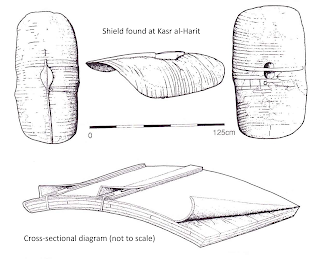
The Roman scutum  A large, curved plywood shield excavated at Kasr al-Harit in the Egyptian Fayyum was originally identified as belonging to a mercenary serving with the Ptolemaic forces. Its size and shape, however, is remarkably similar to the sculptural representations of shields carried by soldiers on the altar of Domitius Ahenobarbus (below) and the monument of Aemilius Paullus (Bishop & Coulston, 2006, 61).


The Greek historian Polybius, writing in the Hellenistic period of 264 BC - 146 BC, states the Roman infantry shield was convex and measured 1.18 m (4 feet) long by 0.74 m (2½ feet) wide, with a thickness of a palm’s breadth at the rim. He described its construction as follows (Polybius, Historia, VI.23):

‘The Roman panoply consists firstly of a shield (scutum), the convex surface of which measures two-and-a-half feet in width and four feet in length, the thickness at the rim being a palm's breadth. It is made of two planks glued together, the outer surface being then covered first with canvas and then with calf-skin. Its upper and lower rims are strengthened by an iron edging which protects it from descending blows and from injury when rested on the ground. It also has an iron boss (umbo) fixed to it which turns aside the most formidable blows of stones, pikes, and heavy missiles in general.’

By comparison, the shield found in 1900 at Kasr al-Harit (pictured) was 1.28 m long and 0.635 m wide. It was fashioned from three layers of wooden strips, possibly birch wood. The inner vertical strips were overlaid front and back with horizontal layers, to produce a curved plywood shield that was thicker at the centre than at the edges. The nine or ten vertical strips measured between 60 and 100 mm in breadth; the forty horizontal ones were 25 to 50 mm. Both inner and outer surfaces were covered with lamb’s wool felt, but the edges were not reinforced with metal. The shield had a wooden ‘barleycorn’ boss with a vertical rib (spina) attached with iron nails above and below it on the shield face and a horizontal handgrip behind the boss.

Over time the large, oval shield of the Republican period was altered to become the iconic square-edged, rectangular version. As shown below, first the curved top and bottom edges were cut square, then the curved sides followed suit. For the next two hundred years or so this convex, rectangular shield remained in use until almost wholly replaced by round shields, which had become much more common by 4th-century AD.

Regardless of the changes to its size and shape, the construction of Roman shields remained consistent. In other words, the shields were made of wood, covered in felt, leather and/or linen - all materials that are clearly flammable. It is therefore unbelievable and highly improbable that Roman soldiers ever cooked chickpea flour, or indeed any of their rations, in or on their shields.

References:

Bishop, M. C. and Coulston, J. C. N., (2006), ‘Roman Military Equipment: from the Punic Wars to the Fall of Rome’ (second edition), p. 61.

Polybius, Historia (‘The Histories’), Book VI.23 (‘The Roman Military System’), Lacus Curtius, Available on-line: https://penelope.uchicago.edu/Thayer/E/Roman/Texts/Polybius/6*.html (accessed February 28th, 2022).

Whitehouse, R., (2016), ‘Liguria’, Bradt Travel Guides, Available on-line: https://books.google.co.uk/books?id=tSSICwAAQBAJ&pg=PA35&redir_esc=y#v=onepage&q&f=false (accessed March 2nd, 2022).

Endnotes:

1. BBC History Magazine, August 2019, ‘History Cookbook: Farinata’, p. 86.

Wednesday, May 05, 2021

Today, April 23rd, marks the 457th birthday of William Shakespeare (1564-1616). As he is famously thought to have been born and died on the same date, so April 23rd is also the 405th anniversary of his death on St George's Day 1616.
This day was once celebrated with feasts much like those we enjoy at Christmas, but its popularity waned in the 18th-century after England's union with Scotland. Parts of England do still honour George with annual fetes and pageants, perhaps with traditional entertainments like Morris dancing or Punch and Judy shows. Most will undoubtedly involve dragons of some persuasion, but very few will involve feasting.


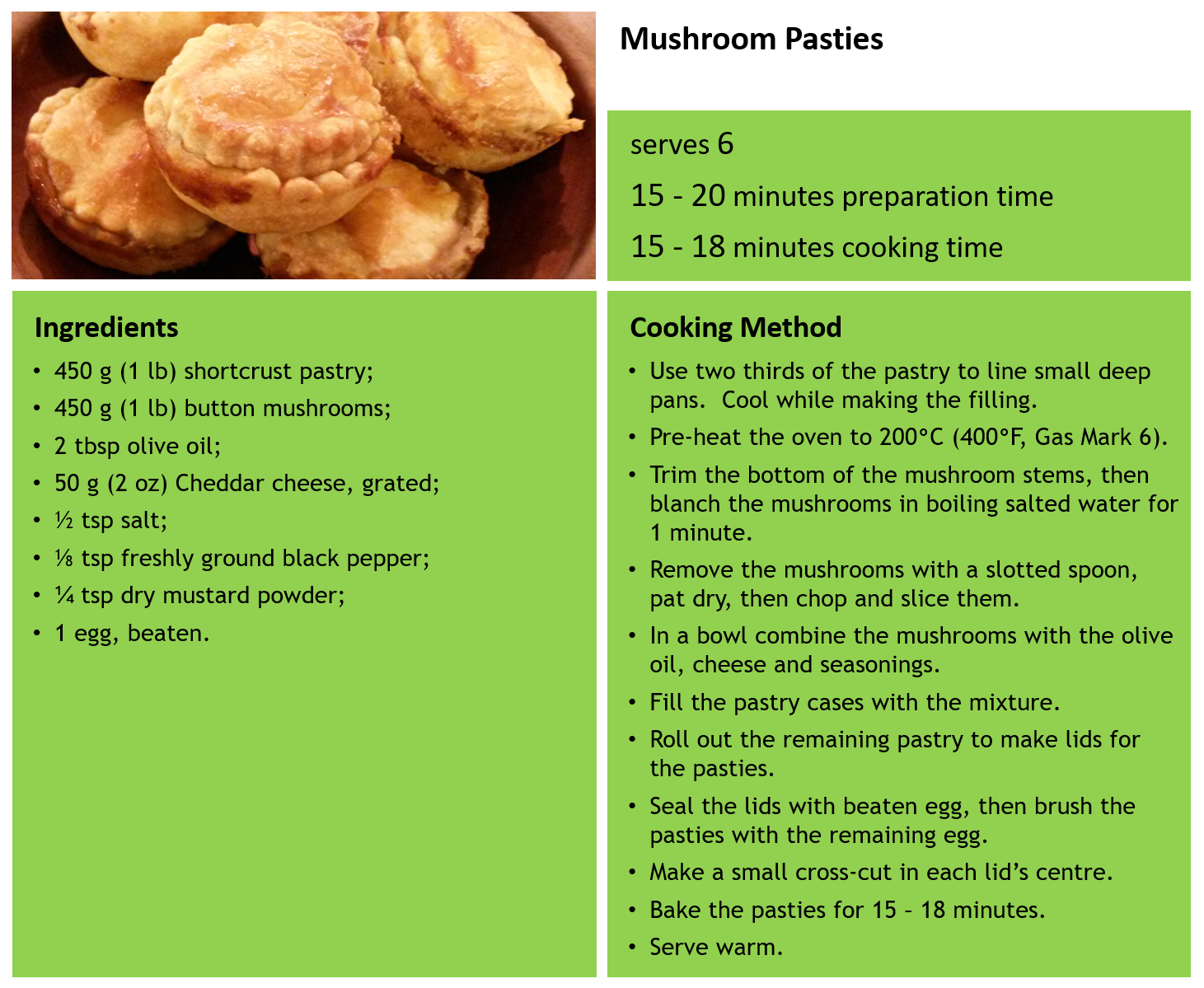
Unlike in December, where we dine on roast turkey and Christmas pudding, there do not appear to be any traditional recipes associated with St George's Day. Undeterred, back in 2018 we set about producing some sweet and some savoury Mediaeval dishes for the visitors to The Potteries Museum and Art Gallery to try. If you would like to recreate these tasty dishes, then here are the recipes:


We hope you have a very merrie St George's Day with our Tastes Of History. Enjoy!

Dispelling Some Myths: Mediæval Peasants ate Bland Food

The first thing to note is that what people ate was heavily dependent on where they lived and at what time. For example, Europe covers a large area with many different countries and peoples living within its boundaries, and the Mediæval period in Europe lasted a long time, roughly ten centuries. Much as today trends in food came and went, and access to particular foods may have been restricted by a multitude of factors such as the climate affecting harvests, war and pestilence, trade links, cost and a person’s disposable wealth, religious observance, personal preference and so on.

New research  Much is known of the medieval dietary practices of the nobility and ecclesiastical institutions, but less about what foods the medieval peasantry consumed. A 2019 study by a team from the University of Bristol examined a range of historical documents and found that medieval peasants ate meat, fish, dairy products, fruit and vegetables. Before this study, there had been little direct evidence that this was the case.

Yet, even though we now have a better understanding of what Mediæval peasants and the poorer social classes ate, the notion persists that food was bland or tasteless. This is a myth, so what is the truth?

What did Mediæval peasants eat?
  In some respects, the Mediæval diet was much healthier than ours today. There was little or no processed food and far less sugar. Bread remained a staple food for all, but what did Mediæval peasants actually eat? The University of Bristol team analysed food residues from the remains of cooking pots found at the small medieval village of West Cotton in Northamptonshire [1]. By identifying the lipids, fats, oils and natural waxes still present on the porous ceramics, the team found that stews (or pottages) of mutton and beef with vegetables such as cabbage and leek were a mainstay of the medieval peasant diet. The research also showed that dairy products, likely the “green cheeses” [2] known to be eaten by the peasantry, also played an important role in their diet.

A rural diet  It should be borne in mind that, unlike today, for most of the Mediæval period people did not live in towns and cities. While reliant on good harvests, a predominantly rural existence meant people could forage for wild fruits, nuts, fungi, plants and herbs. For those with a little piece of land, then homegrown produce was available. Cottage gardens were common but unlike today’s obsession with cultivating flowers, people would focus on growing vegetables and plants with useful culinary or medicinal properties. Unsurprisingly, herbaceous borders were for herbs!

Fish could be dried or salted, but fresh fish, like herring or mackerel, was popularly eaten by people living near the sea. Those living near rivers could eat freshwater fish such as eels, pike, perch, trout, sturgeon, roach, and salmon. Indeed, in the Mediæval period, English rivers had a plentiful supply of salmon making it a cheap source of food. So cheap in fact that some towns passed laws to limit the feeding of apprentices (trainees) with salmon to no more than three times a week. Today, the introduction of fish farms has made salmon more affordable, but it is still considered a luxury by many.

Farming was one way of providing meat, but unlike today meat remained a luxury unaffordable to the majority. For those who could, the rich and privileged, hunting game (deer, pheasant, rabbit and so on) was a popular pastime that added to their diet. But for those poorer folk who could, they might keep animals all year round. Cows, for example, could provide milk for producing cheese, while chickens could be reared for their eggs or for their meat. When they had the money a Mediæval peasant might buy some meat from the local market, while game animals, like rabbits, they could catch for themselves - but beware of being caught poaching (see right).

Added flavours  Herbs and plants such as parsley, rosemary, thyme, basil, garlic, chives and many others were, just as now, added to recipes to develop and improve flavour. Spices, however, were expensive and beyond the means of the ordinary Mediæval peasant.

The spice trade has a long and lucrative ancestry. Although there was an overland trade route across Asia, it was mainly by sea that the trade grew. Voyages from Roman Egypt to India, for example, soon brought vast quantities of aromatic spices to the markets of Greece and the Roman Empire. Roman trade with India continued for more than three hundred years and allowed exotic spices, such as black pepper, to be far more commonplace than in later centuries. As Roman influence waned, however, the trade in spices followed suit. A short-lived resurgence in the 5th-century AD did not prevent trade declining once more in the 6th-century.


The Arab traders, who had always been sailing directly to spice-producing lands, kept their albeit weakened hold on the spice trade in the post-Roman period and through the Middle Ages. But by the tenth century both Venice and Genoa had begun to prosper through their trade with the Levant. The bitter rivalry that developed between the two cities ended with Genoa's defeat and Venice securing a monopoly of trade in the Middle east for the next century. In so doing, the Venetians made vast sums of money by trading spices with buyer-distributors from northern and western Europe. Nonetheless, this trade did little to reduce the price and few ordinary folk could afford spices.

Bland and tasteless food
  Today many of us have to hand a wide variety of spices from across the globe and we use them almost daily to flavour our meals. From that familiarity it is easy to see why, if Mediæval peasants lacked access to such spices, many might assume their food was bland and tasteless. But, as we have seen, this was far from the case. The Mediæval peasant had a well-rounded, healthy diet which, while dependent on good harvests, kept them properly nourished. Apart from bread, they ate stews (adding meat when it could be afforded), fish, a wide variety of fruit and vegetables, eggs, and dairy products. By adding herbs from their garden plots, their meals could be as flavoursome as ours.

Notes:

1. The pottery analysed covered a period of around 500 years during the Middle Ages.
2. In this instance the cheeses are not “green” by reason of colour but for its newness or under-ripened state. The whey has not fully pressed out of it and the cheese has not been thoroughly dried nor aged. “Green cheese”, therefore, is typically white in colour and usually round in shape.

Roman Fast Food

The popular representation of Roman dining is that of reclining on benches enjoying a buffet style meal. This image, however, only really reflects the practice of wealthier families, those who could afford a home with a triclinium (dining room) and slaves to prepare, cook and serve them. So, what of the ordinary city folk? What was their dining experience and how would one go about recreating it?

Walk through the remains of ancient Pompeii, Herculaneum or Ostia and you will encounter some form of food or drink outlet on virtually every street corner. They are easily recognisable from their distinctive masonry counters, which in fancier thermopolia (sing. thermopolium) might be decorated with frescoes. Embedded in the counters were earthenware jars (called dolia; sing. dolium) used to store drink or dried foods, as shown in the example from Herculaneum below right. A dolium in the thermopolium attached to the House of Neptune and Amphitrite also in Herculaneum had the carbonized remains of nuts [1]. It is not thought that hot food was kept in these dolia. Firstly, because there does not appear to be a way to heat the jar embedded in the counter and secondly because it would be difficult for the dolia to be cleaned out after use [1].

Archaeologists tend to refer to all such places as “thermopolia” which, in the ancient Greco-Roman world, was a commercial establishment where it was possible to purchase ready-to-eat food. The name derives from Greek θερμοπώλιον (thermopōlion), or “cook-shop”, but literally means "a place where something hot is sold". In Latin literature thermopolia were also called:

· Popinae (sing. popina), a general name for a restaurant.

· Tabernae (sing. taberna, “tavern”) or street-side snack bars that often featured a thermopolium or a tavola calda (“hot table”), which might be accessible from the pavement. Sometimes a taberna was simply called a thermopolium.

· Cauponae (sing. caupona) which were predominantly drinking establishments where food was also available.

· Hospitia (sing. hospitium) a hotel that typically had a ground floor popina.

· Stabula (sing. stabulum) an alternative name for a tavern, public house or hostelry.
Thermopolia
were the forerunners of, and comparable with, today's restaurants serving modern fast food. They ought to be likened to a cross between a hamburger fast food restaurant and a British pub or a Spanish tapas bar. Directly accessible from the street, each had a large counter with a receptacle in the middle from which a variety of food and drink was served to ordinary Romans. Many were the inhabitants of multi-storey insulae who simply could not afford a private kitchen. Significantly, excavations of entire neighbourhood blocks in Pompeii have revealed an unusual lack of tableware and formal dining or kitchen areas within the homes [2]. Penelope Allison of the University of Leicester, for example, did find isolated plates here and there, such as in sleeping quarters suggesting Romans would eat food in certain areas where they possibly engaged in other activities [2]. What she did find in the homes were multiple mini barbecue-type fire boxes, suggesting that "BBQ or fondue-style dining" often took place [3]. Allison concluded that the majority of Pompeii’s population consumed food "on the run".
Historians often extend findings from Pompeii to other parts of Italy, particularly Rome, given the former's proximity to the Eternal City. Indeed, the numerous fast-food restaurants identified in Pompeii are mirrored in other parts of Italy and across the Rome Empire. It seems, therefore, that most Romans, living in apartment blocks or in rather confined spaces, lacked the room for stoves and other cooking equipment. It makes eminent sense, therefore, to use smaller brazier-style cookers as these would not require large quantities of fuel to be carried up several flights of steps. Smaller cookers, like the Greek-style version shown above, also mitigated the risk of fire which, after the Great fire of Rome in AD 64, remained a major concern in densely packed urban centres. After due consideration, therefore, one might theorise three possible scenarios by which metropolitan Romans fed themselves:

1. Produce, bought daily, was taken upstairs to be prepared and cooked on small brazier style cookers.

2. Meals were purchased from a street vendor, taken upstairs and reheated before consumption.

3. Meals were purchased from a thermopolium and eaten either on the move or at the street side food outlet.

"Fast food" restaurants became popular because they were plentiful. Thermopolia offered a panoply of affordable choices for Rome's and Pompeii's residents, many of whom made enough money as artisans, shopkeepers, and weavers to support these places. Besides, grabbing food to go, either in a house or on the street, seems to match the energy and flexibility of the Italian mindset. The vibrant street and bar scenes today, together with the multi-purpose design of Italian homes, with bedsteads stacked in a corner or kitchenettes in surprising places, reflect the wonderful, slightly chaotic, qualities of early Roman life.

Notes:

1. Berry, J., (2007), The Complete Pompeii, Thames & Hudson.
2. Allison, P.M., (2007), "The Insula of the Menander at Pompeii Volume III: The Finds, a Contextual Study", Oxford University Press.
3. Viegas, J., (2017) “Ancient Romans Preferred Fast Food”, Discovery News.

Kitchenalia: Roman Testum

In "Kitchenalia" we introduce objects from different historical periods, discover a bit about their history and find out how each was made. We look at how, through our practical experiments, we have learnt to best use them, and we have even included some recipes for you to try at home.
Today's object is a piece of Roman kitchenware that we know as the testum.

There are different types of ancient baking covers, sometimes referred to as "portable ovens". They are generally called either clibanus or testum, with both terms mentioned so frequently in Roman literary sources that there can be little doubt they were a fundamental element of the Roman kitchen at many levels of society [1]. The former term, clibanus, is the more fashionable Latinised Greek word, while testum represents the Italian tradition for these ovens [2] and will be the convention we will use.

From practical experiments we and others [2] have undertaken with replicas, the testum seems cleverly designed to apply heat above and around the food being cooked. Indeed, written clues for this cooking technique are hinted at in the surviving collection of Roman recipes known as Apicius. In one recipe the fire’s embers are described as being “…above and below [the dish].” While the description does not exactly tell us how this may happen, we can imagine the dish must have been lidded for the fire to be on top of the food.

Further evidence may be inferred from the many Roman-era North African-ware lidded casseroles that would suit this technique. Examples have a small base dish that sat in the embers on the hearth, and curved walls to allow embers to be pushed beneath the dish. Today we would call this earthenware pot a “tagine”, so rather than an oven it might be more accurate calling the testum a tagine.
The version we use (pictured right) is slightly different in that it is essentially a one-piece cover with straight-walled sides, an upward curving outer rim and a central vent that can be plugged. Allied with the description in Apicius, the testum's shape - its form - gives a clue to how it might have been used - its function.

The Romans typically cooked on a flat, stone topped plinth upon which one or more charcoal or wood fires were lit. Many examples of these "cookers" (pictured below right) can be seen in the archaeological sites of Pompeii and Herculaneum in Italy. From practical experience, cooking pots can be heated next to the hot fire, placed in or be surrounded by its embers or coals, or set above the fire on iron trivets. By adjusting the vessel's height above the fire or the pot's proximity to the heat source, the cooking temperature can be easily regulated to boil, simmer or simply warm foods.

Unlike the version used by Sally Grainger in her blog post for the British Museum [2], our testum does not have a base dish and is thus more of a lid or cover. To use it you first have to rake clear a space in the hot coals. Remember the stone top will have been heated, so anything you now place in the cleared space will also be warmed from beneath.

So, let us say we place a dish containing chicken pieces on the stone top. It begins to warm from the radiated heat below. Having been gently warmed by the fire, to avoid thermal shock, the testum can be placed over the dish and the hot charcoal scrapped back against its side walls. The rim becomes important at this point as it allows hot coals to be placed on top as shown below.
With coals surrounding the testum and on top of it an intense heat can be generated inside. If a little liquid or a sauce had been added to the dish inside, then by keeping the sauce simmering consistently around the meat plenty of steam is generated which, in a similar way to a traditional tagine, gathers in the dome and falls back into the dish, preventing the meat from drying out.

The steam is trapped if the vent is plugged, but by removing the plug, excessive steam can be released. Moreover, a visual check on cooking progress can be made. Once the food is cooked, the hot cover can be carefully removed whereupon, rather cleverly, the rim acts to keep the embers away from the food.

According to Apicius a testum is ideal for roasting or pot roasting albeit rather small dishes. We have used our testum to bake meat, bread and cakes. Indeed, we have successfully produced a Roman form of “cheesecake” we call “libum”. The recipe is derived from the one recorded by Marcus Cato's in his book On Agriculture. In early Roman history, libum was sometimes a sacrificial cake offered to the spirits of the household [3]. Equally, it was sometimes a farmhouse cake served hot or a delicate honeyed cake served at the end of an elaborate dinner [3]. With the exception of Cato, all ancient authors associate libum with honey so that is the path we have chosen. Trust us, hot from the testum or oven, and smothered in honey, libum is absolutely delicious. Cenebus bene.

Notes:
1. Cubberley, A., Lloyd, J., & Roberts, P. (1988), Testa and Clibani: The Baking Covers of Classical Italy, Papers of the British School at Rome 56, pp. 98-119. Retrieved February 1st, 2021.
2. Grainger, S. (2013), From Parthian chicken to flat breads: experimenting with a Roman oven, British Museum Blog. Retrieved January 31st, 2021.
3. Dalby, A. & Grainger, S. (2012), The Classical Cookbook, The British Museum Press, p. 110.

Our thanks to Graham Taylor of Potted History who handmade our replica testum. A new version complete with base can be commissioned via the Potted History website.

Tuesday, May 04, 2021

Kitchenalia: Roman Mortarium

Most people are probably familiar with a pestle and mortar. They come in many different guises: board-like, bowl-shaped or, more traditionally, cup-shaped. There are many different sizes, and the mortars, at least, can be made of wood, stone, bronze, brass or even cast iron.


All, however, are used for grinding, pounding, mixing or blending ingredients, typically for culinary or medicinal purposes. Perhaps you have one in your kitchen, but do you use it? And what of its history?

In "Kitchenalia" we introduce objects from different historical periods, discover a bit about their history and find out how each was made. We look at how, through our practical experiments, we have learnt to best use them, and we have even included some recipes for you to try at home.

Today's object is an iconic piece of Roman kitchenware: the mortarium. You will be unsurprised to discover the English word “mortar” is derived from classical Latin where mortarium means, among several other usages, "a receptacle for pounding" or "a product of grinding or pounding". The series of examples pictured above are more reminiscent of Mediæval types ideal for grinding spices, herbs and plants, and for mixing medicinal powders.


Roman tastes in food favoured the use of sauces, relishes and subtly blended herbs and spices. Such ingredients often needed to be ground or puréed, and a strong mixing-bowl with a grit-roughened interior was, therefore, an essential kitchen utensil. Those shown above are replicas of Roman mortaria (sing. mortarium) copying the form and function of a plethora of examples recovered from across the Roman world.

Adoption in Britannia
  Mortaria are a uniquely Roman utensil, perhaps being one of only a handful of things the Romans truly innovated. Vessels recognizable as mortaria were produced in Italy from at least the 3rd-century BC. Together with other Italian earthenware and coarse wares, amphorae for example, these mortaria were exported all around the Mediterranean. Many of the surviving artefacts have stamps and marks impressed into the clay which have aided research into this widespread trade. Such stamps were the abbreviated names, often of the individual potter, and symbols impressed on to the handles, rims or necks of, say, amphorae or other wares. In the case of amphorae we also have tituli picti were inscriptions painted onto different parts of amphorae after firing. Together, the stamps and inscriptions provide valuable information about the involvement of individuals and places in the production, transport and supply of foodstuffs or in this case kitchenware across the Roman Empire.

From tracing the movement of mortaria, some of the earliest examples in the archaeological record appear in Britain before the Roman conquest. From this one can infer that there were people, either native Britons or immigrants, who imported and enjoyed Roman-style cuisine [1] that benefitted from the use of Roman-style kitchenware. Thus the mortaria dating to the later Iron Age discovered at sites located predominantly in the south-east were continental imports.

The scale of this trade was initially low but after AD 43, both imported and locally made mortaria became increasingly common in Britain. Two major manufacturing centres began to dominate the British market. One was situated south of Verulamium (St Albans) and the other in either Gallia Belgica, an area we would think of as the area covered today by Belgium, Luxemburg and northern France. By the later first century, imports had all but ceased, with only very low numbers of Gaulish mortaria represented after AD 100. Moreover, as time moved on, production was no longer confined to southeast Britain, with many other potters in the Midlands and further north producing and distributing mortaria albeit alongside the still-dominant south-eastern production centres.

As the Romans slowly but steadily took control of the new province of Britannia, the army became instrumental in spreading mortaria and many other Roman introductions, like olive oil and wine, across Britain. From the archaeological record, by the second century AD, mortaria had evidently become increasingly popular. It is evident from the distribution of finds that these ubiquitous objects had spread from predominantly urban and military settings to more rural settlements.

Form
  The replicas we use represent the form most likely seen in museum displays across Britain and, indeed, elsewhere in the area covered by the Roman empire. But the earliest mortaria found in Britain were straight-sided, usually without a spout, but with a roughened surface created by the potter incising lines into the interior before firing. By the mid-first century, however, it seems the early version had become obsolete being replaced by the classic mortarium we see represented above right. Each has a well-defined rim and flange, with coarse sand or grit embedded into the bowl’s interior to replace the internal scoring.

Function  According our Roman sources, such as Apicius and Columella who both refer to a mortarium in the context of cooking, mortaria were used to grind, pound and mix together a range of ingredients. These included, but not limited to, herbs, spices, meat, oil, fish sauce and wine, in order to prepare dishes such as rissoles, sausages and moretum - a kind of cheese.


Our knowledge of what foods mortaria were used to process is guided by the scientific analysis of the organic residues on surviving vessels or fragments thereof. Even though mortaria are hardened pieces of kiln-fired pottery, the clay itself remains porous such that liquids, oils and fats can seep into and remain trapped in the material. A study[2] from 2011 has shown that, as well as plant material (vegetables, herbs, spices, etc.), many of the mortaria excavated from across Britain also had the residue of animal fats and dairy products present. In one example from Stanwick in the north of England, the dairy residue was identified as butter. It seems butter was still used by local Britons in preference to imported olive oil. Significantly, it is highly unlikely that these mortaria were used to make butter or cheese. The shape of the mortarium does not lend itself well to the lengthy churning of the milk until it becomes butter. As far as cheesemaking is concerned, the roughened surface simply cannot be kept clean enough to avoid spoiling the end result. This, however, does not preclude the processing of cheese in the mortarium as an ingredient in a dish.

Analysis and comparison of residues in mortaria and cooking pots provide clues to the diet in Roman-Britain. But the science lends weight to the argument that mortaria were not used for the actual cooking. From our practical experiments, mortaria are better suited as "food processors" and not cook pots. They are, as the name suggests, ideal for the grinding, pounding and mixing of ingredients to recreate flavoursome Roman recipes.

Notes:

1. In much the same way as the British aristocrats who eagerly imported wine from the Roman world.
2. Lucy J.E. Cramp, L.J.E, Evershed, R.P. & Eckardt, H (2011), "What was a mortarium used for? Organic residues and cultural change in Iron Age and Roman Britain", Antiquity 85.

Our thanks to Jim and Emma Newboult of Trinity Court Potteries who made our replica mortarium.