Showing posts with label Archaeology. Show all posts

Wednesday, March 22, 2023

Dispelling Some Myths: Who built the pyramids?

One of the more enduring popular ‘myths’ is the idea that the great pyramids at Giza in northern Egypt were constructed (c. 2575 - c. 2465 BC) by a vast army of maltreated slaves. How this falsehood has flourished for centuries and even transformed popular perceptions of a historical event can be laid firmly at the feet of Greek historian Herodotus (c. 484 - c. 420 BC). Although considered to be the ‘father of history’, Herodotus was responsible for passing on a number of dubious ‘facts’. The ‘pyramids built by slaves’ is one such.

Herodotus' tale  In Book II of his Histories, Herodotus tells us that in building the Great Pyramid the pharaoh Khufu (called Cheops by the Greeks) ‘brought the people to utter misery’ having ‘compelled all the Egyptians to work for him…in gangs of a hundred thousand men, each gang for three months’ to build a pyramid ‘20 years in the making’ (Histories, Book II, 124). While it is true that slavery certainly existed in Pharaonic Egypt, as it has in nearly all cultures and civilisations both ancient and modern, its study has been complicated by the terminology the ancient Egyptians themselves used in referring to different classes of servitude throughout Egypt’s long history. However, by interpreting the evidence from just the commonly used words suggests there was three types of enslavement in ancient Egypt: chattel slavery, bonded labour, and forced labour. Even so, Egyptologists believe nearly all pyramid builders were drawn from a mix of 4,000 to 5,000 permanent skilled workers and some 20,000 temporary labourers working in some form of co-operative effort. These free men arrived from their villages at the building site to assist for a few months at a time, probably during the annual Nile floods when agricultural work was suspended. These workers were typically paid in graded notional rations of bread and beer that were tradeable for other goods and services. This is not to say slaves were not involved in some way, just that they were clearly not the majority of the builders. Moreover, it was also not unheard of for work parties to compete against each other in building tasks. A work gang from a particular village who moved a block of limestone the furthest in one day might be rewarded with extra rations of food, drink [1], or even make-up.

Make-up?  One thing the ordinary man or woman living 4,000 years ago would not be seen in public without is make-up.  Imagine going off to build a pyramid, your skin covered in moisturising oil, possibly perfumed, and your eyes lined with kohl, a black make-up similar to mascara. It may not sound particularly manly - not the sort of thing you would expect builders to do today, but the moisturising oil protected the skin from sunburn. With the sun blazing down, reflecting off the desert and rocks, the kohl eye-liner was needed to cut down the sun’s glare and protect your eyesight. We see such tricks used by American football players or cricketers today. So, for manual labourers working beneath the hot, bright Egyptian sun, make-up was essential. In fact, one day in 1170 BC some tomb workers went on strike because they had run out of make-up. They claimed they wanted more moisturising oil and clothes, vegetables and fish. While the workers held a peaceful sit in, local bureaucrats tried to get them back to work eventually offering the workers a month’s worth of supplies. It was to no avail, however, the strikers held out until they received two months of make-up and food.

The myth evolves  As in so many things, the truth did not get in the way of a good story and thus Herodotus’ account took root. His version of how the Great Pyramid came to be was repeated by later ancient writers. Some, like the Jewish historian Josephus (AD 37 - 100), conflated the builders with those people of Israel reputedly held in slavery in Egypt according to the Old Testament book of Exodus. Yet even this ‘fact’ remains stubbornly uncorroborated by any dateable archaeological evidence. If we ignore the questionable historicity of the biblical narratives, however, today’s historians cautiously date the supposed events described in Exodus to the 13th century BC. Rather inconveniently this is 1,000 years after the pyramids of Giza were built.

All the same, Herodotus’ account was combined with the assumed truth ascribed to the biblical texts and this ensured the more salacious story survived to influence 18th and 19th century antiquarians, historians and artists. Then in the first half of the 20th century, Hollywood epic movies, for example 1955’s ‘Land of the Pharaohs’, cemented ‘slave-builders’ in popular culture. It most likely that the popular myth is based on a longstanding misunderstanding of how the ancient world worked.

Reference:

Blackmore, R., (2022), ‘Think Piece: Why we need to get our facts straight’, BBC History Magazine November 2022, p. 44.

Endnotes:

1.  Beer and bread were staples of the ancient Egyptian diet. Indeed, one might argue their entire culture was based on these two ingredients, which are laden with calories needed to provide energy for work. The bread may have been quite greasy, like a paratha, but of a lighter texture. Providing an amazing amount of energy, it would be fair to say that the pyramids were built on bread. Indeed, archaeologists have excavated huge bakeries capable of suppling the vast quantities of bread needed and eaten by the workers at Giza. In addition, we know ancient Egyptians also ate:

  • Onions to go in a salad or eaten with bread.
  • Wild fowl - ducks and geese - hunted by the river. Egyptians particularly enjoyed crispy roast duck basted in honey.
  • Meat and fish could also be salted and hung up to dry. Many tomb and temple scenes show butchery, the preparation of meat and birds hanging from hooks in shops.
  • Dried fish also featured in ancient Egyptian diets.

Wednesday, May 05, 2021

Roman Fast Food

The popular representation of Roman dining is that of reclining on benches enjoying a buffet style meal. This image, however, only really reflects the practice of wealthier families, those who could afford a home with a triclinium (dining room) and slaves to prepare, cook and serve them. So, what of the ordinary city folk? What was their dining experience and how would one go about recreating it?

Walk through the remains of ancient Pompeii, Herculaneum or Ostia and you will encounter some form of food or drink outlet on virtually every street corner. They are easily recognisable from their distinctive masonry counters, which in fancier thermopolia (sing. thermopolium) might be decorated with frescoes. Embedded in the counters were earthenware jars (called dolia; sing. dolium) used to store drink or dried foods, as shown in the example from Herculaneum below right. A dolium in the thermopolium attached to the House of Neptune and Amphitrite also in Herculaneum had the carbonized remains of nuts [1]. It is not thought that hot food was kept in these dolia. Firstly, because there does not appear to be a way to heat the jar embedded in the counter and secondly because it would be difficult for the dolia to be cleaned out after use [1].

Archaeologists tend to refer to all such places as “thermopolia” which, in the ancient Greco-Roman world, was a commercial establishment where it was possible to purchase ready-to-eat food. The name derives from Greek θερμοπώλιον (thermopōlion), or “cook-shop”, but literally means "a place where something hot is sold". In Latin literature thermopolia were also called:

· Popinae (sing. popina), a general name for a restaurant.

· Tabernae (sing. taberna, “tavern”) or street-side snack bars that often featured a thermopolium or a tavola calda (“hot table”), which might be accessible from the pavement. Sometimes a taberna was simply called a thermopolium.

· Cauponae (sing. caupona) which were predominantly drinking establishments where food was also available.

· Hospitia (sing. hospitium) a hotel that typically had a ground floor popina.

· Stabula (sing. stabulum) an alternative name for a tavern, public house or hostelry.
Thermopolia
were the forerunners of, and comparable with, today's restaurants serving modern fast food. They ought to be likened to a cross between a hamburger fast food restaurant and a British pub or a Spanish tapas bar. Directly accessible from the street, each had a large counter with a receptacle in the middle from which a variety of food and drink was served to ordinary Romans. Many were the inhabitants of multi-storey insulae who simply could not afford a private kitchen. Significantly, excavations of entire neighbourhood blocks in Pompeii have revealed an unusual lack of tableware and formal dining or kitchen areas within the homes [2]. Penelope Allison of the University of Leicester, for example, did find isolated plates here and there, such as in sleeping quarters suggesting Romans would eat food in certain areas where they possibly engaged in other activities [2]. What she did find in the homes were multiple mini barbecue-type fire boxes, suggesting that "BBQ or fondue-style dining" often took place [3]. Allison concluded that the majority of Pompeii’s population consumed food "on the run".
Historians often extend findings from Pompeii to other parts of Italy, particularly Rome, given the former's proximity to the Eternal City. Indeed, the numerous fast-food restaurants identified in Pompeii are mirrored in other parts of Italy and across the Rome Empire. It seems, therefore, that most Romans, living in apartment blocks or in rather confined spaces, lacked the room for stoves and other cooking equipment. It makes eminent sense, therefore, to use smaller brazier-style cookers as these would not require large quantities of fuel to be carried up several flights of steps. Smaller cookers, like the Greek-style version shown above, also mitigated the risk of fire which, after the Great fire of Rome in AD 64, remained a major concern in densely packed urban centres. After due consideration, therefore, one might theorise three possible scenarios by which metropolitan Romans fed themselves:

1. Produce, bought daily, was taken upstairs to be prepared and cooked on small brazier style cookers.

2. Meals were purchased from a street vendor, taken upstairs and reheated before consumption.

3. Meals were purchased from a thermopolium and eaten either on the move or at the street side food outlet.

"Fast food" restaurants became popular because they were plentiful. Thermopolia offered a panoply of affordable choices for Rome's and Pompeii's residents, many of whom made enough money as artisans, shopkeepers, and weavers to support these places. Besides, grabbing food to go, either in a house or on the street, seems to match the energy and flexibility of the Italian mindset. The vibrant street and bar scenes today, together with the multi-purpose design of Italian homes, with bedsteads stacked in a corner or kitchenettes in surprising places, reflect the wonderful, slightly chaotic, qualities of early Roman life.

Notes:

1. Berry, J., (2007), The Complete Pompeii, Thames & Hudson.
2. Allison, P.M., (2007), "The Insula of the Menander at Pompeii Volume III: The Finds, a Contextual Study", Oxford University Press.
3. Viegas, J., (2017) “Ancient Romans Preferred Fast Food”, Discovery News.

Pompeii, Bodies and Assumptions

Last year, on Saturday November 21st, 2020, the Italian culture ministry announced to the world’s media that archaeologists have discovered the exceptionally well-preserved remains of two men scalded to death by the volcanic eruption that destroyed the ancient Roman city of Pompeii in AD 79. Unsurprisingly this led to usual flurry of media stories.
Those shown are only a small sample but all have one thing in common: all pronounced the younger man was a "slave". He may well have been, but that is a bold claim. So, we thought we would read the news releases and gather the evidence, What quickly becomes apparent is that each media outlet is simply rewording a single press release from the Archaeological Park of Pompeii. So, despite the appearance of multiple sources, the presented evidence is, well, uncorroborated.

The new find is located in Civita Giuliana, about 686 metres (750 yards) northwest of Pompeii’s city walls. Being on private property, government-commissioned excavations only began at the villa in 2017, when archaeologists stepped in to help prevent looters from tunnelling into the site and stealing artefacts. During this latest series of excavations the two bodies were found. It is likely that the victims were seeking refuge from the inundation of ash and pumice resulting from the eruption of Mount Vesuvius. At about 9 o'clock on that fateful morning, the two were caught in the pyroclastic current of superheated volcanic debris that swept through the town, Their clenched feet and hands - the "pugilists stance" [1] - clearly demonstrates how the men died.
The intense heat destroyed soft tissue, but the men's teeth and bones were preserved. The subsequent voids left by the soft tissue was filled with plaster, left to harden, and then excavated to reveal the outline of their bodies. Examination of the resulting plaster casts has allowed researchers to evaluate the clues. The researchers believe the figures are those of a young slave and a richer older man, presumed to be his owner, based on the vestiges of clothing and their physical appearance. One of the men is described as aged between 30 and 40, and of "high-status". This assessment seems to be based on his "stronger" bone structure, particularly around his chest area, and that he was wearing a tunic and had traces of a woollen cloak under his neck. The stronger build might be indicative of a better diet but that is speculative at best; there is no guarantee that both men did not have access to similar food. As to his clothing, he is wearing garments typical of most Roman men in the first century AD. The cloak, for example, is sensible outer wear for someone contemplating or attempting to escape the town. So, the only way to link his apparel to a "higher-status" would be by analysis of the weave to show it was of finer quality. This, however, has either not happened, perhaps because the casting does not provide the necessary detail, or the results have yet to be made public. There is no suggestion that the actual material survived.

It was revealed that the younger man was probably aged between 18 and 25. Like the older man, he too is thought to have been wearing a pleated tunic, possibly made of wool. Again, it would be extremely difficult to determine the younger man's status based on his clothing. However, it was noted that he exhibited several compressed vertebrae, and it is this observation that seems to be the only reason the experts to believe he was a manual labourer or slave. Both explanations are clearly plausible, but neither can be definitively proven. One could speculate that by being a labourer he may have been susceptible to just such a back injury. Certainly, osteoarchaeologists note that repetitive manual tasks, performed over time, often result in identifiable skeletal joint wear. Equally, of course, it may have been an accidental injury. The point is that neither of these simple premises lead to a conclusion that he was a "slave". The honest answer is that we will never truly know who these two men were or their relationship. But that does not sell the story.

Notes:

1. The "pugilists stance" is typically seen in severely burned bodies and characterised by flexion of elbows, knees, hips and neck, and clenching of hands into fists. This is caused by high-temperatures from fires, resulting in muscle stiffening and shortening.

A Brief History of Foods: Roman Wines

It may be reassuring to know that the wine gods continue to flourish.  While many narcotics are now illegal, the Roman god of wine Bacchus [1] must be revelling in our continued love of alcohol.  Of course, depending on which piece of research you read, the medical world has categorized wine as either a dangerous substance or, in small amounts, as beneficial to your health.  Such contradictions intrigued Pliny (the younger) who was amazed by the efforts that went into wine production when its effects were so questionable:

"If we consider the matter carefully, no area of human life is so laborious [as wine production], as though nature had not given us the healthiest of drinks, water, which all animals drink, apart from the fact that we even make our beasts of burden drink wine.  So much work, so much toil, so much money is put into wine, and this despite that it prevents the mind and leads to madness.  It is the cause of many crimes, and yet it is considered so attractive that much of mankind can see no other reason for living..” (Pliny, Natural History, XIC-137).

Pliny’s disapproval of wine consumption did not prevent him writing many books about its production, which had become essential to Roman agriculture.  In climates where the vine would not grow, the land was deemed habitable only for barbarians.  The borders of the Empire, to the north and south, mirror the limits of vine growing in the Roman period.

As is the method today, Romans harvested and crushed the grapes before beginning the first fermentation in a large open vat, where the grapes (referred to as "must') remained anywhere from a few days to a few weeks.  Then additives might be combined in the must. 

The Romans stored the mix in wide clay vessels and buried them in the ground to maintain a constant temperature.  The process of maturing wine in wooden barrels was a Celtic practice rather than Roman.  Sweeter than wine, some of the must was boiled down to produce a syrup, the basis of many sauces which could be used to sweeten wine.  In the cooking process, Roman chefs, unlike their modern counterparts, used wine already reduced.

While the wine was maturing, it was regularly checked to gauge its progress and to remove detrimental fungi.  The wine would be ready to drink after a year or more of such preparation, but before transferring it to amphorae, it was sometimes filtered.  As with modern methods, the wine would continue maturing in the amphorae; the longer the better.  It seems the Romans enjoyed aged wines considering them more delicious than young ones.  Moreover maturity was thought to be positively healthy with such wines supposedly strengthening the individual, improving the circulation of their blood while giving it a deep red colour, aiding their digestion and ensuring a good night's sleep.

Nowadays few wines are drinkable beyond twenty years old; and their last years are not exactly their finest.  Aware of this, the price of Roman wine rose significantly until the twentieth year after which it began to decline.  There are, however, frequent accounts of thirty year and even older wines.  Did the Romans therefore make longer lasting wines than we do?  Perhaps so, especially given that short term profit may have been less of an issue for Romans than now.  It is equally possible the Romans enjoyed mature flavours that today we would find overpowering.  If so, it might explain Pliny’s description of a famous vintage from classical antiquity of 121 BC, named for that year’s Consul, Opimius, which was still available to drink in Pliny’s time (AD 61 - AD 113).

The Romans distinguished between sweet and dry wines, with Pliny identifying four distinct colours:

Albus: a light white wine similar to a Moselle.

Fulvius: a golden yellow wine like a heavy Sauterne or a dessert wine.

Sanguineus: a blood red wine comparable with most young red wines of today.

Niger: a very dark red aged wine, almost black in colour hence its name.

Typing wines by their colour is difficult because colours are mentioned intermittently in the literary sources.  When wines are named, the sole reference is usually to the place of origin. 

For example, when Apicius mentions wine, he makes no comment as to type, frequently writing simply “wine” or, on one occasion, “old wine”.  We tend to think of red and white wine as two different forms of drink with quite different culinary properties.  In contrast, Apicius makes no obvious distinction and we are left guessing as to his intention.  One Apician recipe, for example, notes wine added to a “white sauce” from which one might infer a white wine is needed.  On another occasion, Apicius writes: “add wine to colour”, which one might reasonably assume to mean use a red wine, but we cannot be certain without experimentation.

The number of vine varieties was innumerable and, consequently, the same was true of the resulting wines produced.  From surviving sources, a few notable wines include:

Albanum, of which there were two kinds, sweet and dry.  This wine, from the Alban hills, was matured for fifteen years, and the Roman authors Athenaeus, Horace, Pliny, Martial and Columella all praise its excellent quality.

Calenum which, according to the poet Ovid (IV-xii-14), was a favourite wine of the patrician class, lighter than Falernum.

Falernum [2] itself was one of the most famous wines of antiquity being frequently mentioned in contemporary literature.  It was drunk after ageing for ten to twenty years; any older and it reportedly gave the drinker a headache.  Falernum could be either white or rosé.

Fundanum was a strong white wine that could intoxicate quickly.  According to the poet Martial, this wine existed in the time of Consul Opimius (Martial, XIII-113).

Massilitanum was a cheap but heavy smoked wine that, according to the physician Galen was healthy and delicious.  Martial, however, thought it disgusting and recommended giving it to beggars to poison them (Martial, XIII-123).

Nomentanum was a mediocre wine that, again according to Martial, one should give to friends and was only drinkable at five years old (Martial, XIII-19).

Opimanum was not a wine per se but rather a famous vintage named after the Consul of 121 BC, Opimius.

Sorrentinum was a light, immature wine which, because it was drunk so young, tasted sour and earthy.  It owed its fame principally to the elegant clay drinking bowls that came from the same region where the wine was traditionally drunk (Martial, XIII-110; Pliny, Natural History, XXXV-46).

Spolentinum was a sweet golden-coloured wine that Martial considered better than a young Falernum (Martial, XIII-120).  It was served mixed with water that had been boiled then cooled in snow (Pliny, Natural History, XXXI-40).

Tarentinum was, according to Galen, a wine with a light taste and low alcohol content. This is surprising as the wines that come from Puglia where Tarentinum was produced are, today, among some of the world’s heaviest.  Martial, of course, thought they were terrific (Martial, XIII-125).

Trifolinum was a wine comparable to Sorrentinum because of its earthy taste. Martial placed Trifolinum seventh on his list of good wines (Martial, XIII-114), while Pliny thought it only good enough for plebeians.
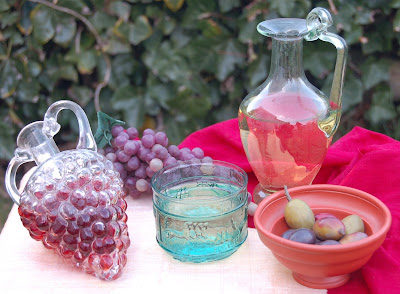
Despite popularising wine drinking across their empire, Roman viticulture was still a relatively new science. Wine spoiled quickly and crude measures were often taken to correct this problem. Cloudy wine, for example, might be cleared by the addition of albumen or chalk. Taste might be improved by smoking, but smoked wines are often bitter, and their colour suffers as a result. Interestingly, to correct the latter the Romans dyed the wine with such as additives as aloe, saffron or elderberry. Wines could also be sweetened with the addition of must, and many flavourings were added from plants and flowers such as myrtle, rose, violet, lilac, coriander, anis, almonds, pepper, cinnamon and so on. Apicius, for example, provides two recipes for heavily flavoured wine [3] where the principal ingredients were pepper and honey. From the ancient Greeks, the Roman winemakers adopted the custom of adding seawater and, similarly, some wines were flavoured with resin much as Greek Retsina is today.

Notes:

1. To the ancient Greeks he was Dionysus. Either way Bacchus/Dionysus was the god of the grape-harvest, winemaking and wine, of fertility, orchards and fruit, vegetation, insanity, ritual madness, religious ecstasy, festivity and theatre.
2. Popularly known as "Falernian" after the district of Italy from where it originated.  Latin Falernum should not be confused with a syrup liqueur or a non-alcoholic syrup of the same name from the Caribbean that first appeared in the 18th-century.
3. A heavily flavoured wine was known as consitum.

Whistling Death!

Burnswark Hill Approaching across the gentle surrounding Dumfriesshire countryside it is hard to miss the brooding eminence of Burnswark Hill. Rising to nearly 305 m (1,000 ft) it is one of the most prominent landmarks of the Solway basin (see below).
Crowning the table-top summit are the remains of the ramparts protecting a 17-acre hillfort. This hillfort is, in turn, flanked to the North and South by two Roman camps, both of which are unusual in design. The northern camp has an elongated form atypical of the standard Roman army practice, while the south camp, more conventional in shape, was furnished with three wide gateways facing up the hill. Each of these is protected by a large tumulus-like earthwork collectively known as the "Three Brethren". After extensive excavations in 2016, Dr John Reid of the Trimontium Trust commented: "This configuration of Roman camps straddling a hillfort is unique in Britain, and attempts to understand its significance have provoked considerable controversy for over half a century" [1].
Practice camp or siege work? For the best part of two hundred years the Roman earthworks were identified as siege camps. In the 1960s a new theory proposed that the camps were "practice" works and thus provided tangible evidence for the Roman army’s famous training regime. As Reid points out: "It is not difficult to see how this practice theory arose. Many archaeologists in the 1950s and 1960s were ex-military men with a grounding in the Classics and close associations with the training activities of the British Army" [1].

To provide one famous tangential example. not necessarily invested in the Burnswark story, consider that iconic British archaeologist of the twentieth century, Sir Mortimer Wheeler. Recognised as one of our most important archaeologists, he had specialised in the Romano-British period before being commissioned into the Royal Artillery for the duration of World War One and later World War Two. During the inter-war years, however, Wheeler turned his attention to the late Iron Age hill-fort of Maiden Castle near to Dorchester in Dorset, where he excavated for four seasons from 1934 to 1937. The interpretation of the site was clearly heavily influenced by his military background and, being adept at generating publicity, his views remained the dominant ones for many years. In time, however, many of Wheeler's specific interpretations of Maiden Castle and of other archaeological sites were discredited or reinterpreted. Yet, Wheeler's championing of archaeology, encouraging public interest in it through the medium of television and radio, makes it easy to see how the training camp interpretation of Burnswark proposed by similar ex-military men became fact in both popular and academic literature.
Sling-shot bullets Over the years the arguments in favour of both training and actual warfare have steadily multiplied but, as is so often the case, many observations have proven susceptible to conflicting readings [1]. Leaving aside such arguments, it is significant for present purposes that numerous lead sling-bullets, stone ballista-balls, and other elements of corroded Roman military hardware had been recovered in earlier excavations at the site [2]. Prior to the 2015 Burnswark Project, of the 130 lead sling-bullets previously recovered, only two main types were recognised: Type I, essentially a lemon shape (above, middle row), and Type II resembling an acorn (above, top row) - a symbol the Romans considered lucky. These two types are common finds at Roman army battle sites in Europe. The Type I's are typically the largest weighing up to 60 grams (2 ounces) [3].

Of these, the rarer acorn-shaped bullets were almost exclusive to a 50-mile radius around Burnswark Hill [1]. These beautifully cast bullets weighed an average of 50 grams. They were predominantly recovered from the East and central South facing hillfort gateways, with a handful also found in the southern Roman camp [1]. In 2017, National Geographic [4] reported on the excavations at Burnswark and that "recent experiments conducted in Germany showed that a 50 gram Roman bullet hurled by a trained slinger has only slightly less stopping power than a .44 magnum bullet fired from a handgun." Other tests have shown that, in the hands of an expert, a heavy bullet or stone hurled from a sling could reach speeds of up to 100 mph (160 kph) [3] and "revealed that a trained slinger could hit a target smaller than a human being from 130 yards [120 metres] away" [4].
Whistling death
As impressive as these statistics are, the Burnswark Project had identified a remarkable third, previously unrecognised, slingshot subgroup. Weighing about 30 g (1 oz), each of the bullets had been drilled with a hole, approximately 5mm (0.2") in diameter and about 5mm deep. Theories on what the hole was for abounded until the field-testing of replica slingshot produced another, equally remarkable, explanation for these cavities.
Two extraordinary facts concerning these small bullets with holes (now dubbed Burnswark Type III's) also emerged. First, being smaller they could be successfully slung in groups of three or four to create a form of grapeshot [3].

The current thinking is that Type III's were used in this manner in close-quarter skirmishing with an enemy (Reid 2016). More intriguingly, the mysterious holes proved to confer an aerophonic quality producing a "whistling" sound in flight. To be slightly more accurate, the replica lead shot made a mechanical buzzing sound eerily reminiscent of an agitated wasp. The simplest explanation for this design modification is that it represents an early form of psychological warfare. As Reid said: "To put it another way, the Roman attackers valued the terror that hearing the incoming bullets would instil in the defenders." Subjected to a hail of these sling-shot bullets, defenders on the hillfort's ramparts would be encouraged to take cover or else risk severe injury or death. With the enemy pinned down physically and psychologically, then the Roman troops could assault and storm Burnswark Hill.
Replicas Inspired by the find we commissioned Dan Towse of Bespoke Pewter to replicate the Burnswark Type III bullet from the interim report on the Burnswark Project published in 2019. From this the average weight and overall dimensions were deduced. Two versions were made, one in lead and a second in lead-free pewter. Each resulting bullet was approximately 23 to 24 mm long but differed in weight. The lead shot are ca. 26 g (0.9 oz) each, while the lead-free pewter are ca. 17 g (0.6 oz).
Unfortunately we are not experienced slingers and will need time to develop the skills needed to repeatedly hurl projectiles in a consistently safe manner and direction. So, as yet we have not been able to experiment with the replicas so do not know whether the "buzzing" effect can be reproduced. In time, and with much practice, we will update this post with what we find out.

Notes:

1. Reid, J.H., (2016), "Bullets, ballistas and Burnswark", Current Archaeology 316.
2. The first was conducted in 1898 on behalf of the Society of Antiquaries of Scotland and involved surveying the earthworks and "turning over" the site. The second major exploration came in the 1960s, and was directed by the much-respected archaeologist George Jobey. In the 1978 publication of his work, Jobey came down firmly on the side of a practice work.
3. . Metcalfe, T. (2016), "Whistling Sling Bullets Were Roman Troops' Secret 'Terror Weapon'", Live Science, retrieved December 12th, 2020.
4. Pringle, H. (2017), "Ancient Slingshot was as Deadly as a .44 Magnum", National Geographic, retrieved December 12th, 2020.
5. Reid, J.H. & Nicholson, A., (2019), "Burnswark Hill: the opening shot of the Antonine reconquest of Scotland?", in the Journal of Roman Archaeology 32, pp. 459-477.

Kitchenalia: Roman Testum

In "Kitchenalia" we introduce objects from different historical periods, discover a bit about their history and find out how each was made. We look at how, through our practical experiments, we have learnt to best use them, and we have even included some recipes for you to try at home.
Today's object is a piece of Roman kitchenware that we know as the testum.

There are different types of ancient baking covers, sometimes referred to as "portable ovens". They are generally called either clibanus or testum, with both terms mentioned so frequently in Roman literary sources that there can be little doubt they were a fundamental element of the Roman kitchen at many levels of society [1]. The former term, clibanus, is the more fashionable Latinised Greek word, while testum represents the Italian tradition for these ovens [2] and will be the convention we will use.

From practical experiments we and others [2] have undertaken with replicas, the testum seems cleverly designed to apply heat above and around the food being cooked. Indeed, written clues for this cooking technique are hinted at in the surviving collection of Roman recipes known as Apicius. In one recipe the fire’s embers are described as being “…above and below [the dish].” While the description does not exactly tell us how this may happen, we can imagine the dish must have been lidded for the fire to be on top of the food.

Further evidence may be inferred from the many Roman-era North African-ware lidded casseroles that would suit this technique. Examples have a small base dish that sat in the embers on the hearth, and curved walls to allow embers to be pushed beneath the dish. Today we would call this earthenware pot a “tagine”, so rather than an oven it might be more accurate calling the testum a tagine.
The version we use (pictured right) is slightly different in that it is essentially a one-piece cover with straight-walled sides, an upward curving outer rim and a central vent that can be plugged. Allied with the description in Apicius, the testum's shape - its form - gives a clue to how it might have been used - its function.

The Romans typically cooked on a flat, stone topped plinth upon which one or more charcoal or wood fires were lit. Many examples of these "cookers" (pictured below right) can be seen in the archaeological sites of Pompeii and Herculaneum in Italy. From practical experience, cooking pots can be heated next to the hot fire, placed in or be surrounded by its embers or coals, or set above the fire on iron trivets. By adjusting the vessel's height above the fire or the pot's proximity to the heat source, the cooking temperature can be easily regulated to boil, simmer or simply warm foods.

Unlike the version used by Sally Grainger in her blog post for the British Museum [2], our testum does not have a base dish and is thus more of a lid or cover. To use it you first have to rake clear a space in the hot coals. Remember the stone top will have been heated, so anything you now place in the cleared space will also be warmed from beneath.

So, let us say we place a dish containing chicken pieces on the stone top. It begins to warm from the radiated heat below. Having been gently warmed by the fire, to avoid thermal shock, the testum can be placed over the dish and the hot charcoal scrapped back against its side walls. The rim becomes important at this point as it allows hot coals to be placed on top as shown below.
With coals surrounding the testum and on top of it an intense heat can be generated inside. If a little liquid or a sauce had been added to the dish inside, then by keeping the sauce simmering consistently around the meat plenty of steam is generated which, in a similar way to a traditional tagine, gathers in the dome and falls back into the dish, preventing the meat from drying out.

The steam is trapped if the vent is plugged, but by removing the plug, excessive steam can be released. Moreover, a visual check on cooking progress can be made. Once the food is cooked, the hot cover can be carefully removed whereupon, rather cleverly, the rim acts to keep the embers away from the food.

According to Apicius a testum is ideal for roasting or pot roasting albeit rather small dishes. We have used our testum to bake meat, bread and cakes. Indeed, we have successfully produced a Roman form of “cheesecake” we call “libum”. The recipe is derived from the one recorded by Marcus Cato's in his book On Agriculture. In early Roman history, libum was sometimes a sacrificial cake offered to the spirits of the household [3]. Equally, it was sometimes a farmhouse cake served hot or a delicate honeyed cake served at the end of an elaborate dinner [3]. With the exception of Cato, all ancient authors associate libum with honey so that is the path we have chosen. Trust us, hot from the testum or oven, and smothered in honey, libum is absolutely delicious. Cenebus bene.

Notes:
1. Cubberley, A., Lloyd, J., & Roberts, P. (1988), Testa and Clibani: The Baking Covers of Classical Italy, Papers of the British School at Rome 56, pp. 98-119. Retrieved February 1st, 2021.
2. Grainger, S. (2013), From Parthian chicken to flat breads: experimenting with a Roman oven, British Museum Blog. Retrieved January 31st, 2021.
3. Dalby, A. & Grainger, S. (2012), The Classical Cookbook, The British Museum Press, p. 110.

Our thanks to Graham Taylor of Potted History who handmade our replica testum. A new version complete with base can be commissioned via the Potted History website.

Tuesday, May 04, 2021

Kitchenalia: Roman Mortarium

Most people are probably familiar with a pestle and mortar. They come in many different guises: board-like, bowl-shaped or, more traditionally, cup-shaped. There are many different sizes, and the mortars, at least, can be made of wood, stone, bronze, brass or even cast iron.


All, however, are used for grinding, pounding, mixing or blending ingredients, typically for culinary or medicinal purposes. Perhaps you have one in your kitchen, but do you use it? And what of its history?

In "Kitchenalia" we introduce objects from different historical periods, discover a bit about their history and find out how each was made. We look at how, through our practical experiments, we have learnt to best use them, and we have even included some recipes for you to try at home.

Today's object is an iconic piece of Roman kitchenware: the mortarium. You will be unsurprised to discover the English word “mortar” is derived from classical Latin where mortarium means, among several other usages, "a receptacle for pounding" or "a product of grinding or pounding". The series of examples pictured above are more reminiscent of Mediæval types ideal for grinding spices, herbs and plants, and for mixing medicinal powders.


Roman tastes in food favoured the use of sauces, relishes and subtly blended herbs and spices. Such ingredients often needed to be ground or puréed, and a strong mixing-bowl with a grit-roughened interior was, therefore, an essential kitchen utensil. Those shown above are replicas of Roman mortaria (sing. mortarium) copying the form and function of a plethora of examples recovered from across the Roman world.

Adoption in Britannia
  Mortaria are a uniquely Roman utensil, perhaps being one of only a handful of things the Romans truly innovated. Vessels recognizable as mortaria were produced in Italy from at least the 3rd-century BC. Together with other Italian earthenware and coarse wares, amphorae for example, these mortaria were exported all around the Mediterranean. Many of the surviving artefacts have stamps and marks impressed into the clay which have aided research into this widespread trade. Such stamps were the abbreviated names, often of the individual potter, and symbols impressed on to the handles, rims or necks of, say, amphorae or other wares. In the case of amphorae we also have tituli picti were inscriptions painted onto different parts of amphorae after firing. Together, the stamps and inscriptions provide valuable information about the involvement of individuals and places in the production, transport and supply of foodstuffs or in this case kitchenware across the Roman Empire.

From tracing the movement of mortaria, some of the earliest examples in the archaeological record appear in Britain before the Roman conquest. From this one can infer that there were people, either native Britons or immigrants, who imported and enjoyed Roman-style cuisine [1] that benefitted from the use of Roman-style kitchenware. Thus the mortaria dating to the later Iron Age discovered at sites located predominantly in the south-east were continental imports.

The scale of this trade was initially low but after AD 43, both imported and locally made mortaria became increasingly common in Britain. Two major manufacturing centres began to dominate the British market. One was situated south of Verulamium (St Albans) and the other in either Gallia Belgica, an area we would think of as the area covered today by Belgium, Luxemburg and northern France. By the later first century, imports had all but ceased, with only very low numbers of Gaulish mortaria represented after AD 100. Moreover, as time moved on, production was no longer confined to southeast Britain, with many other potters in the Midlands and further north producing and distributing mortaria albeit alongside the still-dominant south-eastern production centres.

As the Romans slowly but steadily took control of the new province of Britannia, the army became instrumental in spreading mortaria and many other Roman introductions, like olive oil and wine, across Britain. From the archaeological record, by the second century AD, mortaria had evidently become increasingly popular. It is evident from the distribution of finds that these ubiquitous objects had spread from predominantly urban and military settings to more rural settlements.

Form
  The replicas we use represent the form most likely seen in museum displays across Britain and, indeed, elsewhere in the area covered by the Roman empire. But the earliest mortaria found in Britain were straight-sided, usually without a spout, but with a roughened surface created by the potter incising lines into the interior before firing. By the mid-first century, however, it seems the early version had become obsolete being replaced by the classic mortarium we see represented above right. Each has a well-defined rim and flange, with coarse sand or grit embedded into the bowl’s interior to replace the internal scoring.

Function  According our Roman sources, such as Apicius and Columella who both refer to a mortarium in the context of cooking, mortaria were used to grind, pound and mix together a range of ingredients. These included, but not limited to, herbs, spices, meat, oil, fish sauce and wine, in order to prepare dishes such as rissoles, sausages and moretum - a kind of cheese.


Our knowledge of what foods mortaria were used to process is guided by the scientific analysis of the organic residues on surviving vessels or fragments thereof. Even though mortaria are hardened pieces of kiln-fired pottery, the clay itself remains porous such that liquids, oils and fats can seep into and remain trapped in the material. A study[2] from 2011 has shown that, as well as plant material (vegetables, herbs, spices, etc.), many of the mortaria excavated from across Britain also had the residue of animal fats and dairy products present. In one example from Stanwick in the north of England, the dairy residue was identified as butter. It seems butter was still used by local Britons in preference to imported olive oil. Significantly, it is highly unlikely that these mortaria were used to make butter or cheese. The shape of the mortarium does not lend itself well to the lengthy churning of the milk until it becomes butter. As far as cheesemaking is concerned, the roughened surface simply cannot be kept clean enough to avoid spoiling the end result. This, however, does not preclude the processing of cheese in the mortarium as an ingredient in a dish.

Analysis and comparison of residues in mortaria and cooking pots provide clues to the diet in Roman-Britain. But the science lends weight to the argument that mortaria were not used for the actual cooking. From our practical experiments, mortaria are better suited as "food processors" and not cook pots. They are, as the name suggests, ideal for the grinding, pounding and mixing of ingredients to recreate flavoursome Roman recipes.

Notes:

1. In much the same way as the British aristocrats who eagerly imported wine from the Roman world.
2. Lucy J.E. Cramp, L.J.E, Evershed, R.P. & Eckardt, H (2011), "What was a mortarium used for? Organic residues and cultural change in Iron Age and Roman Britain", Antiquity 85.

Our thanks to Jim and Emma Newboult of Trinity Court Potteries who made our replica mortarium.