Showing posts with label England. Show all posts

Tuesday, October 14, 2025

The Bayeux Tapestry

The Bayeux Museum in Normandy which houses The Bayeux Tapestry is set to close for renovation from 1st September 2025 until October 2027. There has been a rumour for a while now that the Tapestry might return to England so the perfect opportunity for this to happen is created by the museum’s refurbishment. Indeed, on 8th July 2025 the Department for Culture, Media and Sport (DCMS) confirmed the Bayeux Tapestry will be displayed in a special exhibition in the British Museum from next Autumn until July 2027. Coincidentally, 2027 is also the 1000th anniversary of the birth of William I, the Conqueror. Regardless, now there is no excuse for Tastes Of History not to see in person this iconic historical record.

Tapestry? Surely, it’s an embroidery?

For those not familiar with the Bayeux Tapestry, it is an embroidered cloth measuring nearly 70 metres (230 ft) long and 500 mm (20 in) tall. It depicts, in “cartoon”-like form, the events leading up to the Norman conquest of England in 1066. In that year William, Duke of Normandy, challenged King Harold II for the English throne, a challenge that culminated in the day long fight now known as the Battle of Hastings on October 14th. For centuries the tapestry has been preserved in Bayeux, Normandy.

The Tapestry is thought to date to the 11th-century having been completed within a few years of the pivotal battle. Widely accepted as being made in England in the 1070s, possibly as a gift for William, it tells the story from the Norman point of view. The cloth comprises 58 scenes, many with accompanying Latin text (tituli [1]), embroidered on linen using coloured woollen yarns. Significantly the designs are embroidered rather than woven and thus the cloth does not meet the narrower definitions of a tapestry. Despite this it has been referred to as a tapestry for so long that, perhaps to the annoyance of many pedants, changing the name to “The Bayeux Embroidery” has yet to gain popular traction.

Scholarly analysis in the 20th-century concluded that the Tapestry was probably commissioned by William's maternal half-brother, Bishop Odo of Bayeux who, after the Conquest, became Earl of Kent and, when William was absent in Normandy, regent of England. Odo as the commissioner is hypothesised because, firstly, three of his followers mentioned in the Domesday Book appear on the tapestry; secondly, it was found in Bayeux Cathedral also commissioned by Odo, and finally it may have been fashioned at the same time as the cathedral's construction in the 1070s. It is thus thought that the Tapestry was possibly completed by 1077 in time to be displayed at the cathedral's dedication.

Whether or not the tapestry was commissioned by Bishop Odo, it is widely held to have been designed and constructed in England by Anglo-Saxon embroiderers. This makes some sense since Odo's main power base was by then in Kent and there are other, similar embroideries originating in England around the same time. Moreover, the vegetable dyes used to colour the woollen threads can also be found in cloth traditionally woven in England, and even the Latin text contains hints of Anglo-Saxon expressions.

Construction

Nine embroidered tabby-woven linen panels, between 3 m and 14 m long, were sewn together to produce one continuous cloth. At the very first join the borders do not align neatly but as the embroiderers’ technique improved, the joins became invisible especially where they were subsequently disguised with needlework. The design has a broad central zone with narrow decorative borders top and bottom. Two methods of stitching in crewel (wool yarn) were used: outline or stem stitch for lettering and the outlines of figures, and couching or laid work for filling in figures.

The start of the tapestry has been restored somewhat and over the centuries the cloth has been patched in numerous places. Some of the embroidery, especially in the final scene, has also been reworked, albeit with some regard for the original stitching. That final scene, however, does not mark the end of the tapestry; that has been missing from time immemorial, and the final titulus “Et fuga verterunt Angli” (“and the English left fleeing”) is said to be “entirely spurious”. It is thought to have been added shortly before 1814 at a time of anti-English sentiment. Despite the repairs and reworking, the tapestry seems to have maintained much of its original appearance when compared closely with a detailed drawing made in 1730.

What does it depict?

The tapestry tells the story of the events of 1064–1066, culminating in the Battle of Hastings, through a series of pictures with supporting Latin text. The two main protagonists are Harold Godwinson, recently crowned King of England, leading the Anglo-Saxon English, and William, Duke of Normandy, leading a mainly Norman army.

William was born in 1027, or more likely towards the end of 1028, in Falaise in the Duchy of Normandy. As the illegitimate son of Robert I, Duke of Normandy, and Herleva (or Arlette), a daughter of Fulbert of Falaise who may have been a tanner or embalmer, for much of his life he was known as “William the Bastard”. His mother may have been a member of the ducal household but did not marry Robert. She did, however, later marry Herluin de Conteville with whom she had two sons – Odo of Bayeux and Count Robert of Mortain – and a daughter whose name is unknown. During William’s minority one of Herleva's brothers, Walter, became his supporter and protector until, as the only son of Robert I, William became Duke of Normandy at the age of seven. By the age of nineteen he was in control of Normandy.

At the time the tapestry starts its narration, England’s king, Edward the Confessor, was about sixty years old, childless and without any clear successor. In the 11th-century accession to the English throne was not by primogeniture whereby the firstborn son succeeded his father. Rather, succession was decided jointly by the king and an assembly of the Anglo-Saxon nobility known as the Witenagemot. The most powerful member of that council was Godwin, Earl of Wessex. As part of the complex ties of kinship and familial relationships, Edward had married Edith, Godwin’s daughter, in 1043 thus making Godwin’s son, Harold Godwinson, Edward's brother-in-law. By 1050 relations between the King and the Earl Godwin had soured, escalating to a crisis in 1051 and the resultant exile of Godwin and his family from England. It was during this exile that, in 1051, Edward offered the throne to William whose great aunt, Emma of Normandy, was Edward's mother. In 1052 Godwin returned from exile with an armed force whereupon a settlement was reached between the King and the Earl restoring the latter and his family to their lands. Earl Godwin died a year later, and Harold succeeded to his father's earldom. Harold’s brother, Tostig, became Earl of Northumbria and later his other brothers were also given earldoms: Gyrth as Earl of East Anglia in 1057 and Leofwine as Earl of Kent sometime between 1055 and 1057.

According to the Norman chronicler William of Poitiers, Harold had reputedly sworn to honour William’s succession to the English throne in accordance with the wishes of King Edward. Some sources even claim that Harold, having taken part in William's Breton campaign of 1064, had sworn on holy relics to uphold William's claim. No English source, however, records the trip and it remains unclear if it, and the related oathtaking, occurred at all. It is just possible that the whole episode was Norman propaganda intended to discredit Harold who, by early 1066, had emerged as the main contender to succeed King Edward.

1066 and all that

On 5th January 1066, after 24 years as king, Edward died. Shortly before he had probably entrusted the kingdom to his wife, Edith of Wessex, and to Edith’s brother, none other than Harold Godwinson. Indeed, Harold claimed Edward, on his deathbed, had made him heir over William. Whether true or not, the Anglo-Saxon nobles of the Witenagemot convened and confirmed Harold’s succession. The following day, January 6th, Edward was buried in Westminster Abbey and Harold was crowned becoming, it is believed, the first English monarch to be crowned in the Abbey.


According once more to the account of William of Poitiers, King Harold II sent an envoy to Duke William shortly before the Battle of Hastings. On behalf of Harold, the envoy admitted that Edward had promised the throne to William but argued that this was over-ridden by his deathbed promise to Harold. In reply, William did not dispute the deathbed promise but argued that Edward's prior promise to him took precedence.


On hearing of Harold's coronation, Duke William began plans to invade England. Seven hundred 700 warships and transports were built at Dives-sur-Mer on the Normandy coast, but William lacked Papal support for the invasion. However, by claiming that Harold had sworn on sacred relics to support William’s claim to the English throne, he eventually received the Church's blessing and Norman nobles flocked to his cause. Across the Channel and in anticipation of the invasion, Harold assembled 1,400 men of the Fyrd on the Isle of Wight. These men only expected to serve for two months under command of their respective Eorl, Bishop or Shire Reeve (sheriff) but, possibly because of unfavourable winds, William’s invasion fleet remained in port for almost seven months. After waiting all summer on the South coast for William’s expected invasion, and with provisions running out, on September 8th Harold was forced to disband the Fyrd. As his army returned to their villages to bring in the harvest, Harold headed to London.

Four days later, on September 12th, Duke William's fleet sailed from Normandy. Several ships sank in storms, which forced the fleet to take shelter at Saint-Valery-sur-Somme and to wait once more for the wind to change.

Vikings!

What follows next is not recorded on the Tapestry as it does not involve William or his fellow Normans. For completeness, however, on the very same day the King of Norway, Harald Hardrada, who also claimed the English crown, invaded. According to most contemporary sources, the Norwegian king and Tostig, King Harold’s brother, met at Tynemouth, a town literally at the mouth of the River Tyne. Harald Hardrada had a force of, at the most, around 10,000 to 15,000 men on between 240 and 300 longships, while Tostig had a mere 12 ships with soldiers.

Meanwhile, on September 20th, the invading forces of Hardrada, which means “hard ruler”, and Tostig defeated the English earls Edwin of Mercia and Morcar of Northumbria at the Battle of Fulford 2 miles South of York. The battle was a decisive victory for Harald and Tostig and led the people of York to surrender to them four days later. This would be the last time a Scandinavian army defeated English forces. however.

Learning of the Viking invasion, King Harold had led his army North on a forced march from London, reaching Yorkshire in four days. The same day as York surrendered to Harald and Tostig, Harold Godwinson arrived with his army in Tadcaster, just seven miles from the anchored Norwegian fleet at Riccall. From there he probably scouted the Norwegian fleet in preparation for a surprise attack but, as Hardrada had left no forces in York, King Harold marched right through the town to Stamford Bridge.

Early on September 25th, Hardrada and Tostig departed their landing place at Riccall with most of their forces, leaving a third behind to protect the ships. The Norwegians wore light armour as they were only expecting to meet the citizens of York at Stamford Bridge, as agreed the day before, to decide who should manage the town under Hardrada. At the meeting point the Norwegians saw King Harold's host approaching, heavily armed and armoured, and greatly outnumbering Hardrada's force. The Anglo-Saxon’s forced march had caught Hardrada and Tostig by surprise.

According to Snorri Sturluson, before the battle a single man rode up to Harald Hardrada and Tostig. He gave no name, but spoke to Tostig, offering the return of his earldom if he would turn against Hardrada. Tostig asked what his brother Harold would be willing to give Hardrada for his trouble. The rider replied: “Seven feet of English ground, as he is taller than other men” before riding back to the Saxon host. Hardrada was impressed by the rider's boldness, and asked Tostig who he was. Tostig replied that the rider was Harold Godwinson himself.

The Norwegian army was decisively beaten, with both Hardrada and Tostig killed. Hardrada wearing no body armour fought in a state of berserkergang (berserker fury) with his sword in two hands until he was struck in the throat by an arrow and killed early in the battle. Although sources state that Hardrada's remaining army only filled 20 to 25 ships on the return to Norway, it is likely that this number only accounts for the Norwegian forces. Most of the men hailing from Scotland and Orkney probably remained at Riccall throughout the battle and were not counted in the traditional figure. Even so, this was the last Viking invasion of England.

The Battle of Hastings

Delayed by wind and tides the Norman fleet finally set sail for England on September 27th. William’s force arrived the following day at Pevensey on the coast of East Sussex where perhaps 7,000 men were landed. Meanwhile, celebrations over the Battle of Stamford Bridge were short-lived. With the Normans arrival, King Harold was forced to march his army South, covering 27 miles/day for 241 miles, to intercept William. On October 13th Harold established his army in hastily built earthworks at Caldbec Hill some 8 miles from William’s castle in Hastings. The following day, October 14th, the Anglo-Saxon army took position on Senlac Hill (near the present town of Battle) near Hastings. From his base, now only 6 miles away, William’s army advanced to meet Harold’s clashing in what we now call the “Battle of Hastings”. After nine hours of hard fighting, Harold was killed, and his forces defeated. Harold’s brothers Gyrth and Leofwine were also killed in the battle, according to the Anglo-Saxon Chronicle.


Arrow in the eye

The notion that Harold died by an arrow to the eye is a popular belief today, but the identification of England’s king in the vignette depicting his death is disputed. A Norman account of the battle, Carmen de Hastingae Proelio (“Song of the Battle of Hastings”), said to have been written shortly after the battle by Guy, Bishop of Amiens, says that Harold was killed by four knights, probably including Duke William, and his body dismembered. Much later (12th-century) Anglo-Norman histories (such as William of Malmesbury's Gesta Regum Anglorum and Henry of Huntingdon's Historia Anglorum) recount that Harold died by an arrow wound to his head. Later accounts reflect one or both of these two versions.

The figure in the panel of the Bayeux Tapestry containing the inscription “hic Harold Rex Interfectus Est” (“here Harold the King has been killed”) is certainly depicted gripping an arrow that has struck his eye. Many believe the figure with an arrow in his eye must be the king because he is directly beneath the name “Harold”. However, examination of other examples from the Tapestry reveal that the visual centre of a scene, not the location of the inscription, identifies named figures. Some historians, therefore, have questioned whether this man is intended to be Harold or if Harold is supposedly the next figure lying to the right almost supine, being mutilated beneath a horse's hooves. Moreover, some contest that the arrow is a later 18th- or 19th-century modification following a period of repair. In Benoît's engraving of 1729, for example, and in Bernard de Montfaucon's engravings of the tapestry as it was in 1730, a spear or lance is shown in place of the arrow and certainly no fletching. On close inspection, needle holes in the linen suggest something has been removed, or shortened, and fletching added to form an arrow.

A figure is slain with a sword in the subsequent panel, and the titulus above this figure refers to Harold's death (interfectus est, “he was killed”). It is more likely that this figure is intended to be the king slain by the Norman knights attested in the Carmen de Hastingae Proelio. The reference to Harold’s body being dismembered is supported by one account stating: “the two brothers of the King were found near him and Harold himself, stripped of all badges of honour, could not be identified by his face but only by certain marks on his body.” Another source states that Harold's widow, Edith Swanneck [2], was called to identify the body, which she did by some private mark known only to her. Either way, evidence from the Tapestry clearly shows Norman archers at work and it was a tried and tested tactic to loose a volley of arrows at the enemy before a Norman cavalry charge. Perhaps both accounts are accurate and that Harold suffered first the eye wound, then the mutilation, and the Tapestry is depicting both in one scene. Bon appétit!

Endnotes:

1. The term tituli (Latin “inscriptions” or “labels”, sing. titulus) refers to the labels or captions that name figures or subjects that were commonly added to classical and medieval art.

2. “Swanneck” comes from the folk etymology which made her in Old English as swann hnecca, “swan neck”, which was most likely a corrupted form of swann hnesce, “gentle swan”.


Tuesday, September 02, 2025

On This Day: The Great Fire of London rages

September 2nd to 6th, 1666: The Great Fire rages across London destroying four-fifths of the city.

In the early hours of September 2nd, 1666, a fire had broken out in Thomas Farriner’s bakery in Pudding Lane, near London Bridge. At the time blazes were fairly common, which might explain the Lord Mayor of London’s reaction (right). Unfortunately for Sir Thomas and his fellow Londoners a long, hot, dry summer had turned the city’s largely wooden infrastructure into a tinderbox. Within hours 300 houses had been consumed and the fire had spread rapidly, whipped up by a strong easterly wind. Flames leapt easily from one timber-framed building to the next as the fire blazed through London’s narrow warren of streets. Efforts to fight the fire using buckets of water soon failed compelling many people to flee onto the River Thames or out to Hampstead and Moorfields.

By September 3rd, the city’s residents were in despair as the conflagration continued its inexorable spread. Scapegoating began almost immediately with rumours proliferating amid the chaos accusing (wrongly) Dutch and French residents of arson. Xenophobic attacks soon followed. That night brought little respite and as the fire crept eastward, there was genuine fear that the gunpowder stores in the Tower of London would be ignited. Diarist Samuel Pepys (pictured), overcome by witnessing his city’s destruction, wrote: “it made me weep to see it.”

As an aside, we know from his famous diary that on the morning of Tuesday September 4th, Pepys was rudely woken by a servant telling him to get up and get out of his house because the fire was fast approaching his home in Seething Lane on Tower Hill, near to the Tower of London. According to that day’s diary entry Pepys was “[u]p by break of day to get away the remainder of my things; which I did by a lighter at the Iron gate and my hands so few, that it was the afternoon before we could get them all away.” He managed to get most of his belongings to Bethnal Green and safety on September 3rd, but not everything. Pepys’ diary reads:

“…the fire coming on in that narrow streete, on both sides, with infinite fury. Sir W. Batten [1] not knowing how to remove his wine, did dig a pit in the garden, and laid it in there; and I took the opportunity of laying all the papers of my office that I could not otherwise dispose of. And in the evening Sir W. Pen and I did dig another, and put our wine in it; and I my Parmazan cheese, as well as my wine and some other things.”

Some today may wonder why Pepys buried his cheese. The simple answer is that in the 17th-century Parmesan cheese was worth a great deal of money. Even today, it is still pretty valuable. There are reportedly over 300,000 wheels of Parmesan cheese stored in bank vaults in Italy, which are worth over $200 million. Parmesan cheese takes so long to mature that they’re held as collateral against loans to assist the cheesemakers’ cash flow. Cheese is practically a currency. Sadly, the fate of Pepys’ cheese remains unknown, though his diaries describing the incident remain. As far as we know it was never recovered and could still be buried in the garden of Seething Lane just waiting to be found.

Despite the demolition of houses to create firebreaks, on September 4th half of London was burning. King Charles II and his brother, the Duke of York, joined the firefighting efforts but the conflagration overwhelmed all attempts to contain it. That evening the city’s cathedral, St Paul’s, was engulfed in flames. As its roof melted, flowing off in a torrent of molten lead, the building collapsed. It was not until September 6th, the fifth day of the Great Fire, that the flames were brought under control. Just one-fifth of London remained untouched. More than 87 parish churches, 13,000 homes and numerous civic buildings had been destroyed. Hundreds of thousands of Londoners were left homeless but remarkably only six deaths were recorded.

One positive outcome emerged, in the long term at least: the Great Fire had razed the city’s most overcrowded, disease-ridden quarters. While Christopher Wren’s ambitious plans to replace London narrow streets with wide boulevards (as a form of fire prevention) never came to fruition, his masterpiece, the reborn St Paul’s Cathedral, stands today as a testament to the city’s resilience. Meanwhile, the Monument was erected in Pudding Lane to commemorate the Great Fire of September 1666.

References:

Bird, D. (2024), “The Great Fire of London rages” in Anniversaries, BBC History magazine, September 2024 edition, pp. 8-9.

Oxbow Books blog, (2017), “Why did Samuel Pepys bury his cheese, and other pressing questions?”, available online (accessed 12 January 2025).

Gyford, P., (2025), “The Diary of Samuel Pepys: Tuesday 4 September 1666”, www.pepysdiary.com, available online (accessed 12 January 2025).

Endnote:

1. Sir William Batten was Master of Trinity House and Surveyor of the Navy. The Corporation of Trinity House was incorporated by Royal Charter in 1514 to regulate pilotage on the River Thames and provide for aged mariners. The Corporation’s mandate has expanded considerably since then. Today it is the UK’s largest-endowed maritime charity, the General Lighthouse Authority (GLA) for England, Wales, the Channel Islands and Gibraltar and a fraternity of men and women selected from across the nation’s maritime sector.

Wednesday, May 05, 2021

Today, April 23rd, marks the 457th birthday of William Shakespeare (1564-1616). As he is famously thought to have been born and died on the same date, so April 23rd is also the 405th anniversary of his death on St George's Day 1616.
This day was once celebrated with feasts much like those we enjoy at Christmas, but its popularity waned in the 18th-century after England's union with Scotland. Parts of England do still honour George with annual fetes and pageants, perhaps with traditional entertainments like Morris dancing or Punch and Judy shows. Most will undoubtedly involve dragons of some persuasion, but very few will involve feasting.


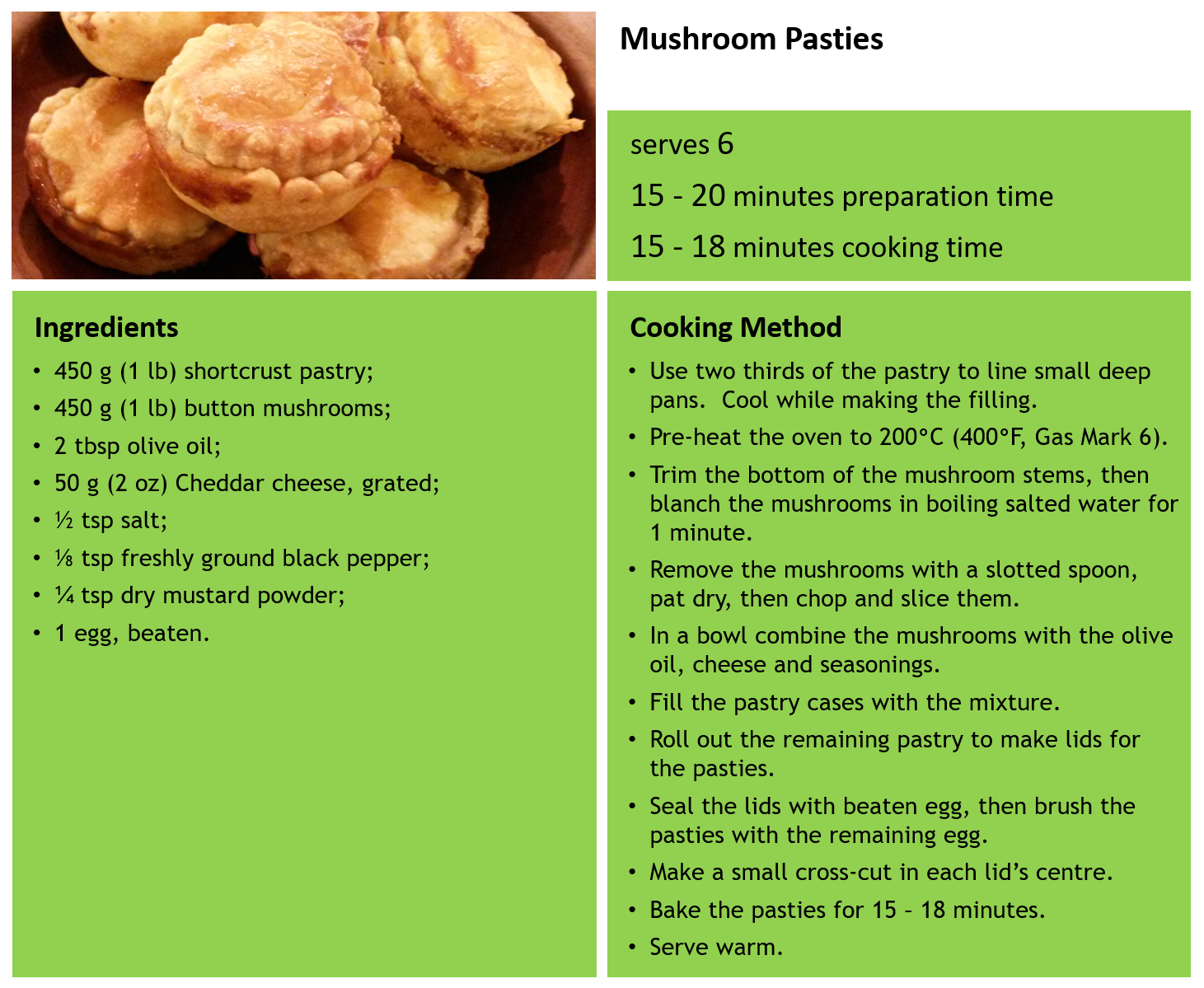
Unlike in December, where we dine on roast turkey and Christmas pudding, there do not appear to be any traditional recipes associated with St George's Day. Undeterred, back in 2018 we set about producing some sweet and some savoury Mediaeval dishes for the visitors to The Potteries Museum and Art Gallery to try. If you would like to recreate these tasty dishes, then here are the recipes:


We hope you have a very merrie St George's Day with our Tastes Of History. Enjoy!