Showing posts with label Ancient Greek. Show all posts

Wednesday, July 01, 2026

Dispelling Some Myths: Homer who?


The writer credited with composing the Iliad and the Odyssey [1], often regarded as one of the most important authors of all time, is the most overrated historical figure, at least in the mind of Professor Michael Scott. That is largely because there is no one person called Homer. Careful study of those works, as well as other surviving epic fragments, has shown that they were not written at a single time by one person. Rather, it is likely that the Iliad and Odyssey were composed over generations by poetry performers known in ancient Greek as rhapsodes.

Each of rhapsōidos improved on the work of their predecessors, curating these epics and honing them to perfection. From probably around 700 BC these works started to be transmitted in a more constant format. Around 550 to 500 BC, they were written down for the first time. The belief circulating by then subscribed their genesis to one particular poet: Homer. The idea of a single, genius author remains much simpler to conceive and a more attractive option than having to accept a slow process of evolution involving hundreds of different creators.

In the end a whole narrative was woven around the likely fictitious Homer: that he lived on the island of Chios, that he was blind, and even that he may have had some divine parentage. In fact, the notional Homer became so popular that later rhapsodes, doing performances of these now “finished” stable poems, liked to claim themselves the “sons of Homer” for added gravitas and fame. Ancient historians even wrote biographies of Homer as a historical figure, and busts were created of him. Yet, as a single man, he probably never existed at all. Bon appétit!

Reference:

Scott, M, (2026), “Who is the most overrated person in history: Homer”, History Extra Magazine January 2026, London: Immediate Media Company.

Endnote:

1. The Iliad and The Odyssey are two epic poems where the former focuses on the Trojan War and the latter on Odysseus’ journey home. The Iliad is set during the final weeks of the Trojan War, a ten-year siege of Troy by Greek states. It centres on the wrath of Achilles, exploring themes of honour, glory, pride, fate, and mortality. The poem depicts both large-scale battles and intimate personal interactions, with gods actively influencing events. It is composed in Homeric Greek and traditionally divided into 24 books, containing over 15,000 lines, and was performed by rhapsodes at Greek festivals. The Odyssey, in contrast, follows King Odysseus’ ten-year journey back to Ithaca after the fall of Troy. It emphasizes cunning, perseverance, and the importance of home and family, featuring encounters with mythical creatures, divine interventions, and personal trials. While the Iliad is action-driven and war-focused, the Odyssey is more introspective, highlighting the hero’s intelligence and resilience.

Tuesday, February 24, 2026

About History: Amazing early inventions

What follows was inspired by a short piece in BBC History Magazine that drew Tastes Of History’s attention to discovering some of the amazing inventions that seemed far ahead of their time. Some were so advanced in their conception that scholars today doubt whether they could have been realised given the technology of the time. Even so, each of these ancient inventions shows a marvel of human ingenuity and have since inspired modern recreations testing their plausibility. This first outing looks at some of the notable ancient Greek inventions.

Steam-power

In the 4th-century BC, a Greek inventor reportedly built a wooden, steam-propelled flying pigeon. Working in Tarentum (modern Taranto), the mathematician and Pythagorean philosopher Archytas of Tarentum [1] created a bird-shaped machine reputedly able to travel up to 200 metres through the air to the astonishment of his fellow citizens. However, the sole mention of this feat occurs some five centuries after Archytas, when Roman author and grammarian Aulus Gellius reports:

“Archytas made a wooden model of a dove with such mechanical ingenuity and art that it flew; so nicely balanced was it, you see, with weights and moved by a current of air enclosed and hidden within it. About so improbable a story I prefer to give Favorinus’ own words: ‘Archytas the Tarentine, being in other lines also a mechanician, made a flying dove out of wood. Whenever it lit, it did not rise again.’”

Clearly Gellius views the report with much the same scepticism as his mentor Favorinus, but that has not stopped later historians and engineers attempting to recreate Archytus’ mechanical marvel. From the available sources, it is thought the lightweight body of the Flying Pigeon was cylindrical in shape and hollow, with wings projecting to either side and smaller wings, like a tail, to the rear. The front of the Pigeon was pointed like a bird’s beak which, combined with its cylindrical body, produced an aerodynamic form to maximise flying distance and speed. The rear of the Flying Pigeon had an opening leading to an internal bladder. The opening was connected to a water-filled, airtight boiler which when heated generated steam that fed into the bird’s bladder. As the pressure of the steam exceeded the mechanical resistance of the connection, the Flying Pigeon was launched. The opening, now acting as an exhaust, allowed the pressurised steam within the bladder to vented out propelling the Pigeon in flight. Reputedly, the wings of the pigeon would flap, assisting its forward motion and keeping it aloft. In this manner the Flying Pigeon was said to have been capable of steam-powered flight for a considerable distance, between 100 to 200 metres.

Archytas would have faced many challenges when designing the first mechanical bird, not least of which was understanding how birds fly. Combine that with engineering knowledge in its infancy, lightweight metal alloys, plastics, and strong adhesives yet to be invented, and the ancient bird’s durability and flight capability could never compare to modern reproductions. Even so, the Kotsanas Museum of Ancient Greek Technology used the materials technology available to Archytas to create a reconstruction (below) of what the flying pigeon may have looked like.


If the accounts of this invention by Aulus Gellius are correct, then this would have been the world’s first self-propelled flying device. While a remarkable achievement, throughout human history there have been many accounts of amazing inventions attributed to some of the greatest thinkers. The question remains “just how many were actually made or were indeed functional?” It would be a lengthy project to try and cover all the possible examples from all recorded history across the globe. Many of these inventions deserve their own detailed examination, but for now we shall focus on just a few.

From the outset it is worth noting that for an invention to materialise takes three linked requirements: firstly, someone must have the initial idea, then there must be the materials technology available to realise the idea, and finally there must be a need for the invention to be successful. Take human flight as an example of the materials technology challenge. It is highly likely that humans, observing birds in flight, dreamed of copying them. As we have seen with Archytas’ Flying Pigeon, the idea was present but the problem for the longest time was the materials technology to deliver the design.

We need a Hero

Archytas’ attempts to harness steam-power roughly 500 years earlier clearly inspired one Hero (or Heron) of Alexandria ((Ήρων ο Αλεξανδρεύς, ca. AD 10 to AD 70). He was a Greco-Egyptian mathematician and inventor residing in Roman Egypt whose contributions to science and engineering, particularly his pioneering work on pneumatics and mechanics, influenced Islamic engineers during the Golden Age of Islam, as well as Renaissance thinkers who revived and expanded upon ancient Greek scientific knowledge. Hero is credited with inventing at least one automated vending machine and complex automata that used gears, pulleys, and hydraulics to animate figures during theatrical performances. He also harnessed air pressure to create a sophisticated wind-powered organ, created the pantograph, and contrived a steam-powered engine known today as the “aeolipile” or “Hero-Engine”. Recorded simply as invention “number 50”, it was an early steam-powered device that harnessed the principles of jet propulsion centuries ahead of its time.

Reconstructions of the aeolipile usually consist of a spherical or cylindrical vessel with oppositely bent or curved nozzles projecting outwards. Hero described the device as a simple boiler forming part of a stand for the rotating vessel. Water is heated in the boiler to vaporise it into steam that passes through tubes to pressurise the spherical vessel. The steam is expelled out of the opposing nozzles to generate thrust perpendicular to the axis of the vessel’s bearings causing it to spin. Aerodynamic drag and frictional forces in the bearings build quickly with increasing rotational speed (rpm) but this consumes the accelerating torque, eventually cancelling it to achieve a steady state speed.

Although considered to be the first recorded steam engine or reaction steam turbine, the aeolipile was neither a practical source of power nor a direct predecessor of the type of steam engine invented during the Industrial Revolution. Heron’s drawing shows a standalone device presumably intended as a “temple wonder” like many of the other inventions described in his work “Pneumatica”. So, despite conceiving the idea, realising it using contemporary materials technology, the aeolipile is a perfect example of the third factor in defining whether an invention will be successful. At the time of its creation, the Hero-engine simply did not solve a contemporary problem or fulfil a specific need.

“Doors to automatic”

It is not known whether Hero’s invention “number 37” was implemented but it was the first to describe temple doors that opened automatically when a alter fire is lit and closed again when the fire is extinguished. As shown in the superb animated graphic by artefacts-berlin.de, heat from a fire burning in an altar in front of the temple would build pressure in the vessel below ground. As the pressure increased, the liquid within the vessel, most likely water, would be forced through a connecting hose or pipe into a second vessel suspended from the ceiling. As the weight of the second vessel increased, ropes attached between it and the doorposts would “magically” pull the temple doors open. By extinguishing the fire, the cooling liquid would be sucked back into the first vessel making the second one lighter such that the counterweight would pull in the other direction to close the doors.

Another temple commission

Hero was also commissioned by an Egyptian temple to make the world’s first coin-operated vending machine to dispense holy water. When a worshiper inserted a coin through a slot in the device, it would fall onto a pan connected to a lever balanced on a guide. The coin’s weight caused the lever to tilt, raising the opposite end and opening a valve to allow a specific amount of holy water to flow from a cistern. The pan continued to move under the weight of the coin until, eventually, the coin slid off into a collection chamber. At that point the lever would return to its initial position closing the valve and stopping the water flow.

Water, water everywhere

Hero was not the only ancient inventor to conceive of water management devices. About 250 years earlier, in 234 BC, the Greek mathematician Archimedes first described a hydraulic device for lifting water during a visit to Egypt. Popularly called the “Archimedes’ screw”, this marvel of ancient engineering traces its roots to Hellenistic Egypt (332 BC to 30 BC) where the original design with spiral tubes wound around a rotating cylinder lifted water from the Nile River into irrigation ditches. Over time, the design was refined, such as incorporating a spiral groove into a solid wooden cylinder, which was then covered with boards or metal to enhance durability and efficiency. Today Archimedean screws are widely employed in irrigation and modern wastewater treatment. The device can also operate in reverse. When water enters from the top, the screw’s rotation can generate mechanical energy, making it suitable for hydroelectric power generation.

Although Archimedes did not claim to have invented the screw, it has become associated with his name from his detailed descriptions and applications of the device. Various other ancient Greek and Roman authors record the use of the Archimedes’ screw for various purposes including draining water, irrigating fields, and even removing bilge water from large ships. In his Bibliotheca Historica, Diodorus [2] describes its use for irrigation in the Nile Delta for nearby military camps and cities, and Vitruvius [3] details a wooden Archimedes’ screw with eight blades in his De Architectura, written between 27 BC and 22 BC. The earliest depiction of the water screw is a fresco at the villa Casa di P. Cornelius Teges in Pompeii dating earlier than AD 79.

The Archimedes’ screw is a simple yet ingenious design. It consists of a helical screw inside a hollow pipe. The bottom end of the screw is submerged in a water source, and when the screw is rotated, water is captured in the helical sections and pushed upward as the screw turns. This process continues until the water exits at a higher elevation. The design can function effectively even if the seal between the screw and the casing is not perfectly watertight. As long as the upward movement of water exceeds any leakage, the device remains efficient. Variants of the design include screws fused with their casings, where both rotate together, and those made of bronze or waterproofed with pitch to prevent leaks.

From its origins in Hellenistic Egypt to its modern applications in renewable energy, wastewater treatment, and industrial machinery, the Archimedes’ screw manifests the timeless principles of simplicity and functionality. The device’s influence and widespread use reflect the exchange of knowledge and technology between ancient civilizations. It exemplifies how ideas can be fostered, shared, adapted, and improved upon across cultures.

Archimedes goes to war

From peaceful purposes Archimedes is also credited with two surprising inventions with which to wage war. During the Siege of Syracuse (214 BC to 212 BC) he was instrumental in the defence of the city. Syracuse was an important city-state on the island of Sicily but, more importantly, it was allied with Carthage against Rome. Thus, during the Second Punic War (218–201 BC), Roman forces, under the command of General Marcus Claudius Marcellus, besieged the city to bring it under Roman control. Archimedes was tasked with devising defensive measures to protect Syracuse from the Roman fleet. His contributions included various war machines and innovations, the Claw of Archimedes being one of the most famous.

The Claw of Archimedes

Also known as the “Iron Hand”, the Claw was reputedly devised to defend the walled city of Syracuse against naval attacks. Its design and precisely how it worked is not fully understood since no contemporary descriptions or drawings have survived. Indeed, most information comes from later historical accounts, such as those by the Roman historians Polybius and Plutarch. They, however, describe the Claw as a large mechanical arm or crane, mounted on the walls of Syracuse, with a grappling hook or claw at one end. When a Roman ship approached, the Claw would be lowered to grab the vessel and the mechanism would then lift the ship partially out of the water, destabilising it and potentially capsizing it. Some accounts suggest that the Claw could also drop the ship suddenly, causing significant damage or even sinking it. Considerable loss was reportedly inflicted on the Roman fleet and, along with other war machines devised by Archimedes, a significant psychological, demoralizing impact was had on the Romans. The ability of these devices to cause unexpected damage and thwart naval attacks instilled fear and uncertainty among the attackers.

Archimedes’ Heat Ray

Archimedes’ “Heat Ray” is the second example of a weapon that he purportedly invented to defend the city of Syracuse. This “Death Ray”, as it is sometimes known, is described as a series of mirrors or polished shields arranged to concentrate sunlight onto a single point. By focusing intense sunlight onto the sails or hulls of enemy ships, the heat generated was supposedly sufficient to ignite the wood and cause the ships to catch fire. However, the device would have required maintaining precise alignment, a clear sunny day to produce intense, directed sunlight, and time to generate enough heat to ignite wood. The practicality of using such a device in a real battle situation, with moving targets and variable weather conditions, is highly questionable. The Syracusans, for example, would have had to adjust the mirrors to maintain focus on the target as the Roman ships approached. These technological challenges raise doubts on the plausibility of the concept.

The earliest mentions of the weapon come from later historical sources, such as the writings of the 2nd-century AD Roman historian Lucian [4], or Anthemius of Tralles who, around AD 500, mentions “burning glasses” as an Archimedean weapon. Significantly, these accounts were written centuries after the events described. Even Archimedes makes no mention of a “Heat Ray” in his surviving works. This lack of contemporary evidence has led many scholars to question the authenticity of later accounts and to doubt whether the “Heat Ray” even existed.

While the historical accuracy and feasibility of Archimedes’ invention are debated, it is still a fascinating example of ancient ingenuity and has, therefore, been a favourite subject of scientific experimentation. During the Renaissance a test was conducted by Comte de Buffon (circa 1747), documented in the paper titled ”Invention De Miroirs Ardens, Pour Brusler a Une Grande Distance”. Just over a century later and a similar experiment by John Scott was documented in an 1867 paper. In more modern times notable attempts have included:

  • In 1973 a Greek engineer named Ioannis Sakkas conducted an experiment at the Skaramagas naval base outside Athens that showed the concept could work under ideal conditions. Seventy mirrors, each about 1.5 meters tall and with a copper coating, were held by Greek sailors and aimed at a plywood mock-up of a Roman warship some 50 m (160 ft) distant. When each mirror was aligned correctly, the focused sunlight managed to ignite the target within a few seconds. Sakkas was convinced that Archimedes could have used bronze mirrors to scupper the Roman fleet.
  • Archimedes’ Heat Ray has featured three times on the US television show “Mythbusters”. Several experiments were conducted in 2004 for episode 5 of season 2 (“Ancient Death Ray”) to test the heat ray. These tests were unsuccessful, leading the team to classify the heat ray as a myth. A year later, a group of students from Massachusetts Institute of Technology (MIT) carried out an experiment using 127 x 30 cm (1 ft) square mirror tiles, focused on a mock-up wooden ship at a range of around 30 m (100 ft). Flames broke out on a patch of the ship, but only after the sky had been cloudless and the ship had remained stationary for around ten minutes. Consequently, it was concluded that the device was a feasible weapon under certain conditions.

  • In 2006 the MIT group repeated the experiment in episode 33of MythBusters season 4 (“Archimedes Death Ray”). This time the team used a wooden fishing boat in San Francisco as the target which again resulted in some charring and a small amount of flame. Once more the Heat Ray was placed in the category of “busted” (or failed) because of the length of time and the ideal weather conditions required for combustion to occur. Moreover, as Syracuse faces east towards the sea, for the weapon to have been successful, the Roman fleet could have only been engaged during the morning for the mirrors to gather the optimal sunlight. It is unlikely that any Roman general would have limited their attacks to favour the Syracusan’s defence. Besides conventional weaponry such as flaming arrows or bolts from catapults would have been a far easier way of setting a ship on fire at short distances. In December 2010, MythBusters again looked at the heat ray in episode 17 of season 8 (“President's Challenge”). Several more experiments were carried out, including a large-scale test with 500 schoolchildren aiming mirrors at a mock-up of a Roman sailing ship 120 m (400 ft) away. In all tests, the ship’s sail failed to reach the 210°C (410°F) temperature required to catch fire, and the verdict was again “busted”. The show concluded that a more likely effect of the mirrors would have been to blind, dazzle or distract a ship’s crew.

The Claw of Archimedes and the Heat Ray represent some of Archimedes’ many remarkable achievements in science, technology, and warfare in ancient times. Despite the lack of detailed contemporary records, the accounts of the Claw's effectiveness during the siege of Syracuse have contributed to the enduring legacy of Archimedes as a pioneering engineer and inventor. The Heat Ray remains a subject of fascination and debate, and whether it existed or not, it symbolises the blend of science and myth that characterises much of our understanding of ancient technology. The concept demonstrates an advanced understanding of optics and engineering in ancient Greece. Moreover, modern experiments suggest that, under ideal conditions, a heat ray could potentially work, although its practical application in ancient warfare is highly dubious. Even so, Archimedes’ work extended beyond military engineering. He made significant contributions to mathematics, physics, and engineering, including the principles of buoyancy (Archimedes’ principle), the concept of levers and, as we have seen, the Archimedean screw.

Antikythera mechanism

The Antikythera mechanism is an ancient Greek hand-powered, mechanical orrery (model of the Solar System). It is believed to be the oldest known example of an analogue computer possibly used to calculate and display information about astronomical phenomena. So far, the exact purpose of the Antikythera mechanism remains hypothetical, although the 37 meshing bronze gears identified in radiographic images speak of the object’s significance. No other geared mechanism of such complexity is known from the ancient world or indeed until medieval cathedral clocks were built a millennium later. Moreover, it is not known whether the bronze-geared technology and the advanced mechanical design skills involved in its construction were used for other applications within the Greco-Roman world. Regardless, the Antikythera mechanism remains unique in having the first known set of scientific dials or scales ever discovered.

The remains of this ancient “computer” are now on display in the National Archaeological Museum in Athens. They were recovered in 1901 from the wreck of a trading ship that sank in the first half of the 1st-century BC near the island of Antikythera in the Mediterranean Sea. Its manufacture is currently dated to 100 BC, give or take 30 years, while its quality and complexity suggest it must have had as yet undiscovered antecedents during the Hellenistic period. Its construction relied on theories of astronomy and mathematics developed by Greek astronomers during the 2nd-century BC. In 2008, research by the Antikythera Mechanism Research Project suggested the concept for the mechanism may have originated in the colonies of Corinth and, since Syracuse was a colony of Corinth, implied a connection with the school of Archimedes. This was clearly the premise of the 2023 film “Indiana Jones and the Dial of Destiny”.

The Antikythera mechanism was fabricated out of bronze sheet, and originally it would have been protected in a case about the size of a shoebox. The doors of the case and the faces of the mechanism are covered with Greek inscriptions, enough of which survive to indicate much of the device’s astronomical, or calendrical, purpose. It is believed that a hand-turned shaft (now lost) was connected by a crown gear to the main gear wheel (pictured right) that drove the further gear trains, with each revolution of the main gear wheel corresponding to one solar year. These 37 meshing bronze gears enable the mechanism to follow the movements of the Moon and the Sun through the zodiac, to predict eclipses and to model the irregular orbit of the Moon. Indeed, the drive train for the lunar position is extremely sophisticated, involving epicyclic gearing and a slot-and-pin mechanism to mimic subtle variations (known as the “first anomaly”) in the Moon’s motion across the sky. This motion was studied in the 2nd-century BC by astronomer Hipparchus of Rhodes, who may have been consulted in the machine’s construction.

On the front of the mechanism is a large dial with pointers for showing the position of the Sun and the Moon in the zodiac and a half-silvered ball for displaying lunar phases. Inscriptions imply that there may originally have been a display of the five classical planetary positions, most likely on the front face, but nearly all the relevant parts are missing. The inscriptions were further deciphered in 2016, revealing numbers connected with the synodic cycles of Venus and Saturn. A subsidiary four-year dial showed when the various Panhellenic games should take place, including the ancient Olympic Games. The large lower dial has a four-turn spiral with symbols to show months in which there was a likelihood of a solar or lunar eclipse, based on the 18.2 year astronomical cycle known to the Greeks from Babylonian sources.

Water clocks

Water clocks are some of the oldest inventions by which time can be measured by the regulated flow of liquid into (inflow type) or out from (outflow type) a vessel where the amount of liquid can then be measured. The simplest form of water clock, with a bowl-shaped outflow, existed in Babylon, Egypt, and Persia around the 16th-century BC. Other regions of the world, including India and China, also provide early evidence of water clocks, but the earliest dates are less certain. Water clocks known as klepsýdres (κλεψύδρες, sing. κλεψύδρα klepsýdra) were used in ancient Greece and in ancient Rome. The word comes from the Greek κλέπτω (kléptō, “steal”) +‎ ὕδωρ (húdōr, “water”), so “klepsýdra” translates literally as “water thief”.

A commonly used design was the simple outflow klepsýdra consisting of a small earthenware vessel with a hole in its side near the base. When unstopped, water drains out of the vessel at a rate determined by the hole diameter. Markings inside the container were used to indicate the passage of time. As the water leaves the vessel, an observer can see where the water is level in keeping with the lines and thus tell how much time has passed. Both the ancient Greeks and Romans used this type of klepsýdra to allocate periods of time to speakers in their courts. In important cases, such as when a person's life was at stake, it was filled completely, but for more minor cases, only partially. If proceedings were interrupted for any reason, for example to examine documents, the hole in the klepsýdra was stopped with wax until the speaker was able to resume his pleading. Given human nature, it would come as no surprise, as some scholars suspect, that klepsýdres may have been used to impose time limits on those visiting Athenian brothels. In Alexandria of the early 3rd-century BC, the Greek physician Herophilos employed a portable klepsýdra on his house visits to measure a patient’s pulse. As one of the earliest anatomists, from his knowledge through dissections of bodies Herophilus was able to deduce that veins carried only blood and, after studying blood flow, he was able to differentiate between arteries and veins. He also noticed the rhythmically pulsing of blood as it flowed through the arteries. He devised standards for measuring a patient’s pulse and used them as an aid in diagnosing sickness or disease. To measure said pulse, Herophilos is said to have made use of a water clock.

Between 270 BC and AD 500, Greek (Ctesibius, Hero of Alexandria, Archimedes) and Roman horologists and astronomers  developed ever more elaborate mechanised water clocks. The Greeks, for example, tackled the problem of the diminishing flow by introducing several types of the inflow klepsýdra. Alexandrian inventor and mathematician Ctesibius is credited as the first to incorporate gears and a dial indicator to automatically show the time. Not an easy feat as the duration of a day changed throughout the year according to the varying length of time between sunrise and sunset. Other innovative designs opened doors and windows to reveal figurines of people, and the 1st-century BC Roman engineer Vitruvius described early alarm clocks with bells, gongs or trumpets.

Summary

From Archytas to Hero and Archimedes, the ancient Greeks’ quest for knowledge was only limited by the materials technology of the day. They understood and harnessed the power of steam centuries before Thomas Savery invented a steam engine in 1648 that would evolve to power Britain’s Industrial Revolution. The ancients Greeks inventors were some of the first to conceive of vending machines, alarm clocks and water management systems that are still used today but which we, perhaps, take for granted. As Tastes Of History researched the topic it became quickly apparent that there were a multitude of other ancient and more modern devices, ideas and machines worthy of mention. We shall undoubtedly return to subject in the future. Bon appétit!

References:

Edwards, M. (2026), “Antikythera mechanism: ancient Greek mechanical device”, Britannica, available online (accessed 13 February 2026).

Greece High Definition, (2025), “The World’s First Coin-Operated Vending Machine: A Greek Marvel of Engineering”, greekhighdefinition.com, available online (accessed 4 February 2026).

Rennison, N. (2023), ‘Q&A: Bird-brained idea’, BBC History Magazine February 2023, p.43.

World History Edu (2024), “Archimedes’ Screw: History and Major Facts”, worldhistoryedu.com, available online (accessed 11 February 2026).

Endnotes:

1. Archytas was an ancient Greek philosopher, who was born in 428 BC in Tarentum, Magna Graecia, now southern Italy. In addition to being a philosopher, he was also a mathematician, astronomer, statesman, and strategos (“general”) for seven consecutive years defending Tarentum.

2. Diodorus Siculus (or Diodorus of Sicily) was an ancient Greek historian from Sicily in the 1st-century BC. He is known for writing the monumental universal history Bibliotheca Historica, in forty books, fifteen of which survive intact, between 60 BC and 30 BC.

3. Vitruvius (born c.  80–70 BC, died after c. 15 BC) was a Roman architect and engineer during the 1st-century BC, known for his multi-volume work titled De architectura.

4. Lucian of Samosata (Λουκιανὸς ὁ Σαμοσατεύς, c. AD 125 – after AD 180) was a Hellenized Syrian satirist, rhetorician and pamphleteer best known for his characteristic tongue-in-cheek style. This he frequently used to ridicule superstition, religious practices, and belief in the paranormal.

Wednesday, January 21, 2026

About History: Othismos and the ancient Greek phalanx

By the 7th-century BC the Greek city-states had adopted the phalanx (pl. phalanxes) as their fighting formation. Armoured hoplites (Greek: ὁπλῖται, hoplitai; sing. ὁπλίτης hoplitēs) formed up in close-order, shoulder-to-shoulder, their shields locked together. The first few ranks of men would project their spears beyond the first rank of shields. The phalanxes advanced towards each other usually at walking pace to maintain cohesion. If the formation was lost, the phalanx would be weakened or rendered useless. It is possible, however, that the hoplites picked up the pace, perhaps breaking into a run during the last few metres. The additional speed needed to be sufficient to gain momentum against the enemy in the initial collision. The famous charge of Athenian hoplites at the Battle of Marathon (490 BC), however, was probably precipitated by a desire to minimize their losses to Persian archery.

Orthodoxy  According to the orthodox view of othismos (“pushing”), the opposing phalanxes would collide, possibly breaking many of the front rank’s spears while attempting to maim or kill the opposing front rank. If one side did not collapse because of this clash, then the men in the succeeding ranks pressed their large round shields (Greek: ἀσπίς, aspis; pl. ἀσπίδες, aspides) against the backs of the men in front and pushed them forward. The combined physical onslaught of one densely packed mass of men was opposed by the counterthrust of the enemy phalanx, shield against shield. Eventually, one side was forced back and its formation disrupted, the hoplites perhaps being literally knocked over and trampled. There was little or no actual fighting after the initial, very brief clash of spears and the struggle essentially became a decisive pushing match (Hanson, 1989, 169). Indeed, Thucydides described hoplite warfare as othismos aspidon or “the push of shields”. As a rule, with few recorded exceptions, the deeper phalanx would almost always win. The orthodox model of collision and push (othimos) has been likened to a scrum in rugby or the scrimmage in American football. This is the view championed by V.D. Hanson in his detailed examination of hoplite warfare.

Evidence?  Yet, no ancient Greek historian explicitly tells us that othismos involved all ranks packing together in a united push to drive their enemy physically backward. Despite this omission, we know hoplite phalanxes were deployed with a series of ranks behind the first. It seems very rare for a phalanx to be less than eight ranks deep from the available evidence, and much deeper formations were not uncommon. Most hoplites in the phalanx, therefore, were unable to reach the enemy with their spears (Greek: δόρυ, dory or doru). They might have been able to finish off fallen enemies with their spear’s butt spike (Greek: σαυρωτήρ, sarouter) and certainly gave moral support to the front rank men doing the actual fighting, but they cannot have inflicted any significant damage upon the enemy. If the othismos was a massed shove, then it would seem to explain the presence of these, otherwise largely superfluous, men on the battlefield. This is the basic tenet of the traditional view of “massed shoving” to explain the role of the rear ranks of a phalanx. Yet if this was the only purpose of successive ranks, then the larger phalanx would always win.

The literary evidence supporting the collision and pushing match is far from extensive, however. Tyrtaeus’ poetry contains a description of two opposing sides clashing “shield against round shield” as does Aristophanes’ comedic play “Peace”. Neither author names a specific battle but the use of the concept in poetry and theatre suggests audiences were familiar with battles fought this way. Beyond the arts, historical accounts of hoplite engagements refer to a press of shields. At the Battle of Delium in 424 BC, Thucydides describes how the two sides collided at the run and fought with a “pushing of shields”. Likewise, during the Battle of Mantinea (418 BC) he also described how the Spartans “advanced” and “pressed” the opposing Argive and Arcadian hoplites routing them, yet it is unclear whether this was shield-to-shield (Thucydides, “History of the Peloponnesian War”, 5.73). In his account Hellenica, Xenophon states that during the later stages of the Battle of Coronea in 394 BC, the Theban and Spartan phalanxes collided head-on at the run and were similarly pressed “shield against shield” (Matthews, 2009, 397). Yet Xenophon and others also use a variation of the term “shield pressed against shield” to describe a close-order shield wall. In these instances, it is clear the phalanxes were not engaged with an enemy, merely waiting to receive an attack. 

Tyrtaeus’ suggestion that hoplites “reach forth and strike the foe” evokes the idea that hoplite combat being conducted at spear’s length from the enemy. Descriptions of battles, for example those of Plataea (479 BC), Sphacteria (425 BC) and Piraeus (404 BC), all record one side being “pushed” or “pressed back” but in a figurative sense. Xenophon employs this sense in his work Hellenica where he describes how the Thebans “pressed” the Spartans at the Battle of Leuctra fought on July 6th, 371 BC (Xenophon, Hellenica, 6.4.14). In these instances, the phalanxes need not have been shield-to-shield, rather the overwhelmed side may simply have been forced backward at the spearpoints of their opponents. Alternatively, as on the island of Sphacteria, when the Athenians engaged the Spartans at range with skirmishers and peltasts [1], the heavily armoured Spartans were pinned in place and could not close to hand-to-hand fighting (Matthews, 2009, 399). The earlier Battle of Thermopylae (480 BC) had ended in a similar manner for the 300 Spartan, 700 Thespian and 400 Theban hoplites defending the famous pass. On the third day, as the Persian Immortals approached, the Greeks withdrew and took a stand on a hill behind the Phocian wall that defended the narrowest part of the pass. Herodotus says:

“In that place they defended themselves with swords, if they still had them, and with hands and teeth. The barbarians buried them with missiles, some attacking from the front and throwing down the defensive wall, others surrounding them on all sides.” (Herodotus, Histories, 7.225.3)

Tearing down part of the wall, Xerxes ordered the hill surrounded before the Persians rained down arrows until every hoplite was dead.

As an aside, the orthodox view that phalanx warfare centred on othismos seems very akin to the “push of pike” that used to accompany re-enactments of English Civil War battles some years ago (pictured right). At that time two opposing blocks of pikemen would advance on each other with pikes levelled to threaten the “enemy”. A few metres before contact the pikes would be angled upward, and the two blocks would then crash to together in a pushing contest [2]. While this sounds very much like the description of othismos, the tactic was not historically accurate but based on health and safety concerns to limit injury to individual re-enactors while still creating a spectacle for audiences. Historically such pike blocks would have advanced to contact whereupon the leading ranks would fence with their pikes to spear their opponents - the equivalent of ancient Greek doratismos (see below).

What to do with the spear?  The hoplite phalanx dominated warfare among the Greek City States from the 7th- into the 4th-century BC. If we have interpreted phalanx warfare correctly, and it is far from clear that we have, then othismos being a shield against shield pushing match seems only half the story. The hoplite panoply, specifically the degree of protection it provides, is far better suited to fighting with spears. During this period the men equipped themselves with a large round shield (aspis) and a 2.1 m to 2.7 m (7–9 ft) long spear (doru or dory) with a sharpened iron blade (aichme) and bronze butt-spike (sauroter). Practical experimentation based on contemporary representations has determined the most likely manner in which hoplites fought. Within the phalanx each man stood at an angle, their left shoulder braced into the dished bowl of their shield while refusing the other shoulder to protect the vulnerable right side of the body while maintaining the ability to deliver spear thrusts (van Wees, 2000, 128-30). This fighting stance positions the feet and legs in a strong attacking platform but also means the hoplite is braced in defence to resist a clash of shields. The latter fits well with the orthodox view of othismos which sees successive hoplites pushing their shields against the right shoulder or back of the man in front. Yet, with his opponent’s shield pressed against his own, the hoplite would be pinned between his comrades and his enemies, vulnerable and unable to strike with his spear. This lack of manoeuvrability among those in close contact is rather neatly captured in the attempt by modern re-enactors to perform othismos pictured below. The image also shows how the cohesiveness of both front ranks might quickly dissolve and how striking with a spear becomes almost hopeless.

So, if the tactic was for two opposing phalanxes to crash into each other and simply push shield-to-shield, then why carry a long spear? In such close-order fighting, the dory effectively becomes an incumbrance. Far better would be to ditch the spear in favour of a shorter weapon such as the sword (xiphos or kopis) by which the hoplite could strike at his opponent from behind his protective shield. This was clearly the favoured tactic of later Roman armies where it certainly proved decisive against the Macedonian phalanx at the Battle of Cynoscephalae in 197 BC.

The Roman model also raises questions about the density of phalanx formations if hoplites were to use their weapons effectively. Thucydides’ description of the Battle of Mantinea reveals that “fear makes each man do his best to shelter his unarmed side with the shield of the man next to him on the right, thinking that the closer the shields are locked together the better he will be protected” (Thucydides, 5.71). This has been the foundation of nearly all recreations of phalanx warfare but rather unfortunately it ignores the maxim that no plan survives contact with the enemy. It can be shown throughout ancient Greek history, including Homeric period warfare, that each battlefield situation dictated the density of a formation. So, while hoplites might have sought protection from their neighbour, they would still need space both to fight and defend themselves.

Peter Krentz argues that a lack of armour for the sarissae wielding “phalangites” [3] meant that Phillip II of Macedon’s phalanxes adopted much tighter formations for added morale and physical protection. The Macedonian king also devised the hedge of sarissae that later so frightened his enemies and, under the right conditions, prevented them from penetrating close enough to do damage with their shorter spears and swords. By contrast, the classical hoplite’s head-to-foot armour instilled confidence in their protection allowing their formations to open the spacing to three feet between men (Krentz, 1985, 52). Both Krentz and van Wees argue that each hoplite thus occupied a six foot space within which they could wield their weapons effectively while limiting an opponent’s opportunities to attack his vulnerable unshielded right side. Any man attempting such an attack would have to be mindful that they were within spear thrusting range from a neighbouring opposing hoplite (van Wees, 2004, 185-186; Krentz, 1985, 51-53).

On SoA Forums, Society member Patrick Waterson described five stages characterising a hoplite battle:

1.  Ephodos (the “charge”) as previously mentioned in Thucydides’ description of the Battle of Delium, Xenonphon’s account of the Battle of Coronea, and the famous charge of the Athenians at the Battle of Marathon.

2.  Doratismos (the “spearing”) evoked by Tyrtaeus’ portrayal of hoplites “reach[ing] forth and [striking] the foe”. Once the phalanxes have closed on one another, then the first contact involved spear fighting rather than a pushing match.

3.  En chersi (the “hand-to-hand”) as evidenced by Herodotus’ account of the Battle of Thermopylae in 480 BC. The hoplites defending the Pass fought with spears, until every spear was shattered, and then switched to xiphē (short swords).

4.  Othismos (the “pushing”) only appears after all other avenues aimed at defeating or overwhelming the enemy had been exhausted. It is notable that the close-order mêlée (en chersi) precedes the shield-to-shield pushing contest (othismos) suggesting that the latter was a means by which men in the rearward files lent their weight to an otherwise static melee once the front-rank men were exhausted and no longer capable of giving their best.

5.  Trope (the “collapse”) could occur very rapidly, even at or before first contact, as indicated by the accounts of battles such as First Mantinea (418 BC).

It would be a mistake to assume all hoplite battles rigidly adhered to these five stages. Circumstance may necessitate a stage being quickly concluded, or long and drawn out, or omitted all together. As Waterson says: “two fairly evenly balanced sides may well find themselves going through all the stages until during othismos it becomes a case of ‘One more push, men, and they will break!’” Regardless, a general pattern emerges whereupon the opposing phalanxes close with each other, perhaps at the run, followed by a mêlée at spearpoint or hand-to-hand with swords. Only when those men in the leading ranks are tired or wounded and unable to effectively continue the hand-to-hand fight might any form of “pushing” contest occur. At this point fatigue might dictate that the first phalanx to yield ground would be unlikely to recover. If, as the orthodox view implies, othismos occurred much earlier when both phalanxes were fresh and invigorated, then a pushing contest might not necessarily produce one side’s collapse.

Undoubtedly this form of combat would have been both physically and mentally exhausting, so it is highly likely that natural pauses would have occurred during a prolonged battle. Such pauses would usefully allow both sides to catch their collective breath, redress their lines, recover the wounded and replace them with men drawn from the succeeding ranks. If the latter is correct, does this interpretation explain the depth of the phalanx? Rather than simply adding their weight to a pushing contest, the additional ranks might be viewed as tactical replacements.

A conclusion?  If doratismos and en chersi are correct, then having the space to wield their weapons means the pushing contest with opposing hoplites shield-to-shield, and pressed forward by their fellows in succeeding ranks, seems impractical. For othismos to occur necessitates the phalanx to transition into close-order which, for ordinary hoplites not particularly well drilled in such manoeuvres, might not be so easy to achieve especially in the press of battle. Is it, therefore, more reasonable to conclude that ancient historians used the term othismos in a more figurative sense. Indeed, Homer uses the word “othismos” in the Iliad even though most historians generally agree that Homeric warfare was fought in very loose formations (Homer, Illiad, 569, 655). Compare that style of fighting to the close-quarter, hand-to-hand mêlée of the 4th- and 5th-centuries and it strongly suggests othismos was a reference to the gradual gaining of ground by forcing - “pushing” - the enemy rearward. This may well have involved pressing forward shield-to-shield, but the primary sources never allude to one mass shove. Rather most describe how armies surged forward, step by measured step, to gain ground from an opposing force.

The evidence we have implies hoplite battles were determined by individual, hand-to-hand combats between hoplites armed with spears and subsequently swords. Once enough hoplites on one side had successfully resolved these individual contests, then they were able to coalesce and advance to “break the enemy’s ranks” before “pushing” them back until the enemy was overwhelmed and routed. Bon appétit!

References:

Hanson, V.D., (1989), “The Western Way of War”, University of California Press.

Godley, A.D. (ed.), “Herodotus: The Histories”, Perseus Digital Library, available online (accessed 9 January 2026).

Krentz, P., (1985), “The Nature of Hoplite Battle”, Classical Antiquity, Vol. 4, No. 1, University of California Press, pp. 50-61.
Matthew, C.A., (2009), “When Push Comes to Shove: What Was the ‘Othismos’ of Hoplite Combat?”, Historia: Zeitschrift Für Alte Geschichte, vol. 58, no. 4, pp. 395–415. available online (accessed 25 June 2025).

van Wees, H., (2000), “Greek warfare : myths and realities”, London: Duckworth.

Waterson, P., (2013), “Othismos - When Push Comes to Shove”, SoA Forums, available online (accessed 11 September 2025).

Endnotes:

1. A peltast (Ancient Greek: πελταστής, peltastēs) was a type of light infantry originating in Thrace and Paeonia and named after the crescent-shaped wicker shield they carried called a “pelte” (Ancient Greek πέλτη, peltē; Latin: pelta). Peltasts often served as skirmishers in Hellenistic armies.

2. This was the author’s first experience of a battle re-enactment where the pike blocks engaged in rugby-like scrummaging. In more recent times, regiments in the English Civil War Society (ECWS) now portray pikemen fencing with their pikes in more historically accurate manner.

3. Philip II of Macedon, equipped his Macedonian “phalangites” with a long spear or pike (Koine Greek: σάρισσα sarissa, pl. sarissae) about 5 m to 7 m (16 to 23 ft) in length. These longer spears improved the strength of the phalanx by extending the rows of overlapping weapons projecting towards the enemy which, in turn, kept the latter at a greater distance. After the conquests of Alexander the Great, sarissae became the mainstay during the Hellenistic era (4th– to 1st-centuries BC) by the armies of the successor states of Alexander's empire, as well as some of their rivals.

Wednesday, August 09, 2023

Dispelling Some Myths: the Kukri

The Nepalese Kukri is instantly recognisable to anyone who has served alongside the men of the Brigade of Gurkhas or has a passing familiarity with bladed weapons. Its distinctive forward curving blade makes it useful as both a melee weapon and as a regular cutting tool.

History  Originating from the Indian subcontinent, but used throughout most of South Asia, the kukri probably developed from a domestic sickle or agricultural tool. Similar implements have existed in several forms throughout the Indian subcontinent being used both as weapons and as tools. Its very utility has seen the kukri serve as the traditional knife for the Nepali-speaking Gurkhas for many decades. Consequently, it has become the defining weapon of the Nepali Army and of Nepal in general. The kukri came to be known to the Western world when the East India Company came into conflict with the growing Gorkha Kingdom, culminating in the Anglo-Gorkha War of 1814–1816.

Use  The weight and shape of the kukri blade makes it an effective chopping and slashing weapon. Most famed from its military use, the kukri is actually the most commonly used multipurpose tool in the fields and homes of Nepal. Its use has varied from building, clearing, chopping firewood, digging, slaughtering animals for food, cutting meat and vegetables, skinning animals, and opening cans. The narrower part of the blade, closest to the handle, means the kukri can be used as a small knife, while the heavier and wider end of the blade, towards the tip, functions well as an axe or a small shovel.

As a weapon, the forward curving blade shape enables the user to cut effectively, inflict deep wounds and, on occasion, even to penetrate bone. From practical experience, because the blade arcs towards an opponent, the kukri user does not need to angle the wrist while executing a chopping motion thus delivering a more forceful strike. The blade’s mass combined with its curvature also allows the kukri to slice as it chops.

Myths  There have been, and still are, a couple of myths surrounding the kukri since its earliest recorded use in the 7th century. Most notable amongst these is the custom that, owing to its sole purpose as a fighting weapon, the blade ‘must draw blood’ before being sheathed. This notion is easily dispelled as a myth by the rather simple and undeniable fact that most kukris are more commonly used as general farm and household utility tools. Under what set of circumstances would anyone believe it would be useful to ‘draw blood’ every time they used a tool.

A second popular ‘myth’ derives from the shape of the kukri blade being stylistically akin to that of the ancient Greek kopis (Κόπις); both weapons having a pronounced forward curving blade. It has been suggested that when Alexander the Great’s Macedonian army invaded India in the 4th century BC, their kopis was introduced to the region and that, over time, this gave birth to the kukri. There are, however, a couple of reasons why this may not be so. Firstly, Alexander’s military ventures where largely confined to the Indus Valley which lies in modern day Pakistan. As the crow flies, Nepal lies several hundred kilometres West meaning there is no direct connection to Alexander or his army. That is not to say the distinctive kopis blade shape could not have been copied or examples traded westward, it just makes it far less likely. It is rather more plausible that, like the Iberian falcata, a contemporary of the kopis, the blade shape was developed independently.

Kopis  For Greek speakers, however, the term ‘kopis’ could describe a heavy, forward-curving knife primarily used as a tool for cutting meat or for sacrificing animals in religious rituals, or it could refer to a one-handed, single-edged, ‘cut and thrust’ sword with a similarly shaped blade. Early examples of kopis had blade lengths up to 65 cm (25.6 inches), making it almost equal in size to the Roman ‘spatha’ [1]. Later examples of Macedonian kopis tend to be shorter with a blade length of about 48 cm (18.9 inches). Like the kukri, the typical kopis had a single-edged blade that curved forward towards the point, the edge being concave on the part nearest the hilt but swelling to convexity towards the point. This shape, often termed ‘recurved’, distributes the blade’s weight such that the kopis is highly capable of delivering a blow with the momentum of an axe while maintaining the long cutting edge of a sword, and some facility to execute a thrust.

Use  The Ancient Greeks often used single-edged blades in warfare, as attested by art (right) and literature, yet it is the straighter, double-edged, leaf-shaped blade of the more versatile xiphos that is more widely represented. Greek heavy infantry (hoplites) seemingly favoured the xiphos, while the curving kopis made it especially suited to mounted warfare. The general and writer Xenophon recommended the kopis (which he did not distinguish from a similar sword known as the ‘makhaira’) for cavalry use in his treatise ‘On Horsemanship’:

’I recommend a kopis rather than a xiphos, because from the height of a horse’s back the cut of a machaira will serve you better than the thrust of a xiphos’.

The precise wording of Xenophon's description suggests the possibility that the kopis was regarded as a specific variant within a more general class, with the term makhaira denoting any single-edged cutting sword. That said, any notable difference between kopis and makhaira (μάχαιρα), which translates as ‘chopper’ or ‘short sword/dagger’, is not entirely clear from the ancient texts. Modern specialists tend to discriminate between single-edged cutting swords as those with forward curve being ‘kopides’ and those without as ‘makhairai’.

Returning to the kukri, apart from similarities with the blade shape there is little evidence to support the Alexandrian theory. Yet, given the resemblance between kopis and kukri, it is hard to shake this popular notion. Even so, it is more likely that the kukri’s design is evidence of parallel innovation, in a similar vein to the building of pyramids by separate cultures across the world. That different people in different parts of the globe could build similar structures speaks more to the universality of human thinking than the need for ‘alien’ explanations. Faced with similar engineering problems, ancient Egyptians and Meso-Americans, separated by time and thousands of miles, produced similar engineering solutions. In its simplest form the pyramid shape is a natural evolution from a mound or pile to a structure that is relatively easy to design and build. In relation to the present discussion, the development of the kukri did not need alien or foreign (that is to say Macedonian) influence to come to fruition.

Endnotes:

1. A longer bladed sword, presumably derived from ‘Celtic’ designs, used by Roman auxiliary troops but mostly by cavalry.

Monday, October 24, 2022

How To: Dress as an ancient Greek

This ‘How to:’ guide is a follow up on a previous post aimed at readers wishing to recreate simple yet effective historical costume. The focus for this guide, however, is on the ancient Greeks and the typical clothing worn from the 5th century BC Classical period until the 1st century AD and Roman rule. Three garments were the basis of Classical Greek dress: the khiton (pronounced kite-n), the peplos, an overgarment worn by women, and the chlamys (pronounced klom-iss), a cloak. These three garments were draped and belted to create various styles. To this list has been added the himation, a form of dress similar to the more famous Roman toga.

First off are a few practical pointers for the modern maker:

Material  The only truly acceptable cloth should be made from the natural fibres of linen or wool. It is recognised that sometimes modern cloth contains a mixture of these and cotton. This is tolerable compromise for those seeking to be as accurate as possible since the mix of fibres will not adversely affect the appearance or the draping qualities of the base material.

Construction  There is no reason why seams that are not immediately visible cannot be machine stitched. There are some people for whom this is an anathema as it is ‘not historically accurate’. We would argue that careful use of machine stitching is merely a practical measure (we live in the 21st century and are not actually ancient Greeks) providing visible seams, such as those in collars, sleeves and hems, are hand sewn.

Fastenings  Garments that were not sewn together were typically fastened using long pins (fibulae), brooches, or buttons and toggles made of bone or wood.

Himation

The himation (ancient Greek: ἱμάτιον / hə-MAT-ee-un) is the ancient Greek equivalent to the Roman toga. In its simplest form it was a large rectangular piece of woollen cloth, approximately 4 m to 5 m in length and 1.2 m to 1.5 m wide, worn by ancient Greek men and women from the Archaic through the Hellenistic periods (c. 750 BC to 30 BC). It was typically worn over a man’s khiton or woman’s ‘peplos’ (see below) being draped about the wearer’s body from shoulder to ankle. As shown right, men sometimes wore the himation alone without a khiton underneath. In this manner it served both as a khiton and as a cloak and was called an ‘akhiton’. Many vase paintings depict women wearing a himation as a veil covering their faces. 

Draping  It is unlikely that the himation can be simply 'slipped' on. Rather it may take the assistance of one or two people. Yet, evidence on how to put on a himation does not survive and modern wearers may have to experiment with the most effective way of doing so. The following guidance is offered to those assistants charged with dressing the himation wearer:

1.  The wearer stands erect with their arms extended laterally at shoulder height, i.e. in a cruciform stance. Other than holding a fold or slowly rotating when instructed, there is little else for the wearer to do.

2.  The cloth is prepared for donning by gathering the folds, which are then placed, from behind the wearer, over their left shoulder. The folds should be uppermost and hang down the wearer’s front, with the bottom edge reaching to between calf and ankle. The folds should be adjusted as required to drape properly. The wearer can assist by bending his left arm at the elbow and gripping the material in place.

3.  Keeping the folds together, drape the material across the wearer’s back, looping up under their right arm, across the chest (the wearer’s left hand must be out of the way) and once again over the left shoulder. Depending on the available space it may be advantageous to get the wearer to perform a slow quarter or half turn to the right.

4.  The remaining material should be draped along the length of the left arm to hang towards the left foot.

Khiton

The khiton (χιτών) is the base garment worn by both men and women. Essentially it is a rectangular piece of cloth folded laterally to form a tube with one side left open. The back corners were pinned to the front to form shoulder straps. Alternatively, khiton could be sewn at the shoulders and sewn from the underarm to the hem to form the tube. The difference between the sexes is the overall length of the garment and where the hemline ends. For women, dresses are typically shown full length with the hemline at least to the ankle. By contrast, Greek men tended to wear their khiton quite short above the knee at mid-thigh level allowing more freedom of movement in exercise, manual labour and in warfare. Some depictions show very short khiton barely covering the genitals [1].

Exomis

A variation on the khiton was the exomis worn, it seems, by men only (although some goddesses might be depicted in one). As for a khiton, it is a rectangular piece of cloth approximately 2 m long and at least 1 m wide worn with the hemline at mid-thigh or shorter. The material is folded in half laterally about the wearer’s body with the top of the fold beneath right armpit and fastened at the left shoulder. The exomis is then belted and the material arranged to drape evenly.

Material  For most people, clothing was made predominantly of wool or linen. The wealthy could afford very finely woven cloth, with some examples being especially sheer or translucent. For our purposes, the basic garment is easily reproduced from a rectangular piece of cloth approximately 2 m long and between 2 m and 3 m wide.

Pattern  As in our previous post, we will focus on a pattern for a woman’s khiton as the men’s version is essentially a shortened form either with or without short sleeves. In its simplest form the Doric style khiton is a folded rectangle of cloth with the two halves fastened with multiple fibulae (pins) or buttons at the shoulders, or simply sewn together. Doric style dresses worn by ancient Greek women may well have been left open along the line B-C (refer to the diagram below), with the two halves of the dress belted in place. If you are feeling particularly risqué then you could follow the ancient example, but we would suggest, for modesty’s sake alone, that the seam along B-C is sewn.

An alternative is the Ionic style khiton which was also a large piece of fabric folded laterally and then pinned at intervals along the arms and at the shoulders. Belted it formed voluminous sleeves when carefully draped.


In the diagram above, the head hole is formed between D-E which, from experience, needs to be at least 25 cm to 30 cm (c. 10 to 12 inches) wide. When folded in half, and if you decide to sew the shoulders together between A-D and E-F, then the cloth must be cut at F-G to allow the right arm to pass through. If you prefer to simply pin the garment at the shoulders with brooches at D-D and E-E, then the cloth would fall on each side and cutting the F-G armhole would not be necessary [2].

In the pattern above the rectangle of cloth needs to be approximately 2 m long and at least 3 m wide (once folded it will be 1.5 m wide).

Belts  Khiton should be belted at the waist. Excess material can be pulled up and bloused over the belt to achieve the desired length. Sometimes women’s dresses were belted twice, once at the waist and again at the hips, giving a double-bloused effect. Similarly, they are also depicted belted high under the breasts, or cross-belted over the chest and tied at the waist.

Peplos

While the Doric style khiton is perfectly acceptable attire for women, a peplos (Greek: ὁ πέπλος) is the more typical clothing for women in ancient Greece by about 500 BC during the late Archaic and Classical period. As with the khiton, the Doric peplos was a body-length (A-C) garment made from a rectangle of cloth folded about the wearer and open on one side of the body. In this case, however, the top edge was folded down about halfway to, or below, the waistline thereby forming an overfold called an apoptygma (pictured below). The folded top edge was pinned from back to front at the shoulders (D-D, E-E) and the garment gathered about the waist with a belt. The shorter, waist-length apoptygma might be belted beneath the material, while longer, below the waistline apoptygma are shown belted just below the bust. In either style the apoptygma provided the appearance of a second piece of clothing. The overfold should be arranged to drape evenly.


Hats and Cloaks

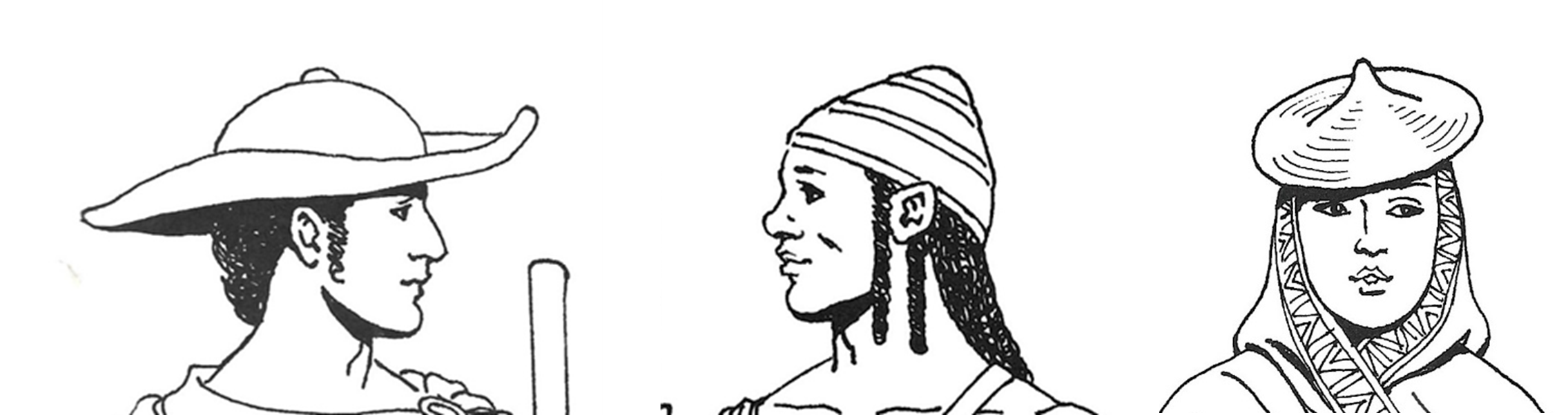
Ignoring helmets, ancient Greek men are often depicted wearing broad-brimmed, bell-crowned hats to protect against sun and rain. Called petasos (below left) they seem popular with travellers and may have been made of straw, felt or leather. A simpler style of straw cap or tatulus (below middle), perhaps favoured by labourers, were also worn. There are far fewer depictions of women wearing hats but this does not they were not worn. In the artist’s impression below right, the lady is shown with her outer garment, a himation, draped over her head, which is probably how most women went abroad outdoors. In ancient societies, particularly the Greeks and Romans, for a woman to be out in public without her head covered or with long flowing, loose hair was seen as a sign of impropriety - loose hair, loose woman. With her head dutifully covered she sports a small straw sun hat known as a tholia.

As instead of the himation or akhiton previously mentioned, when outdoors or travelling ancient Greek men wore a chlamys (right), a short hunting cloak. Once again it is basically a rectangle of, usually, woollen cloth that was draped over the left shoulder and pinned on the right. It could be worn over a khiton or alone, the latter being considered ‘manly’ to endure the elements in a single garment.

If one was to take inspiration from the earlier Etruscans, then a square-cut or semi-circular form of poncho known as a tabenna was seemingly popular in the 7th to 5th centuries BC.

Footwear

Going barefoot was common, especially for children, but the ancient Greeks also wore simple leather shoes when outdoors. Carbatina for example, featured soles and uppers cut from one-piece of leather. Loops cut around the leather’s edges allowed laces to pass through and draw the uppers together about the foot.

Unsurprisingly there is a large variety of footwear depicted in ancient Greek art and sculpture ranging in styles from soleae, sandals held in place by a leather thong or tongue between the toes, to krepidea that enclosed more of the foot. Ankle and calf-height boots are also shown [3].

Endnotes:

1. We are all for ‘authenticity’ but in a school or at a public event this might not be a wise choice professionally and legally speaking.

2. In other words the arms pass through the gaps A-D and E-F.

3. If portraying an ancient Greek character avoid wearing Roman caligae. While these are widely available to buy online, they are the distinctive and instantly recognisable footwear of Roman soldiers and thus wholly inappropriate for the Classical Greek period.